A well-designed sprinkler system does more than keep grass green. It helps Dallas property owners use water efficiently, protect plant material through long dry stretches, and avoid the uneven coverage that often comes from a one-size-fits-all layout. Whether you manage a home in North Dallas, maintain a commercial landscape near the business districts, or are planning irrigation for a new build, the design phase sets the tone for everything that follows.
In a city like Dallas, sprinkler design has to account for heat, wind, clay soil, shaded areas, and the mix of turf, beds, and hardscape that many properties have. A thoughtful plan can reduce runoff, improve coverage, and make future maintenance simpler. The right design also helps your system work with local watering expectations and the specific needs of your landscape, not against them.
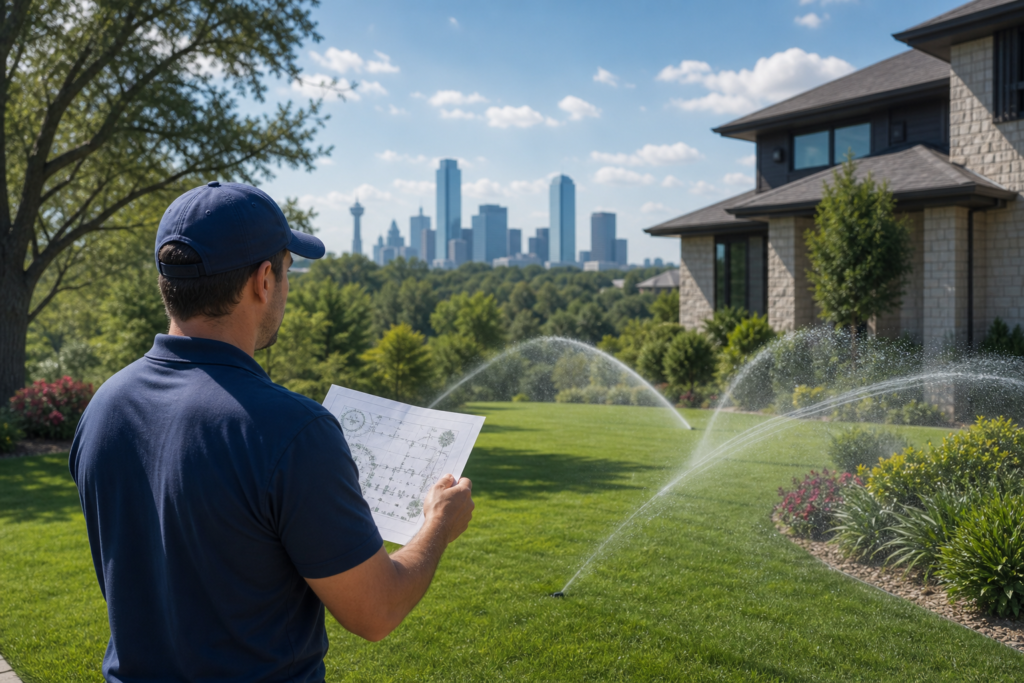
Why sprinkler design matters in Dallas
Dallas landscapes face real pressure from hot summers, sudden weather swings, and long periods without meaningful rain. A sprinkler system that was poorly planned can waste water, leave dry patches, or oversaturate areas near sidewalks, foundations, and low spots. Good sprinkler design starts with the property itself: sun exposure, soil conditions, plant types, slope, and how water moves across the site.
For homeowners and business owners, that means a system built for performance instead of guesswork. The goal is even coverage, dependable operation, and a layout that makes sense for the way the property is used.
What a professional sprinkler design includes
A complete irrigation design is more than placing a few heads on a map. It should account for sprinkler head selection, zone planning, water pressure, precipitation rates, pipe sizing, controller placement, and the needs of different landscape areas. Turf usually needs a different approach than shrubs, mulch beds, or narrow planting strips.
- Site evaluation and measurements
- Zone-by-zone planning for turf, beds, and specialty areas
- Head spacing and spray pattern selection
- Drip irrigation where it makes sense
- Smart controller and weather-based scheduling options
- Backflow and compliance considerations
When these details are addressed up front, the finished system is easier to maintain and more reliable over time.
Designing for Dallas conditions
Dallas properties often deal with compacted clay soil, established trees, full-sun exposure, and steep demands on outdoor water use during the warm months. Those conditions make irrigation planning especially important. Clay soil can hold water longer, which means poorly timed zones may create runoff. At the same time, wind and heat can reduce watering efficiency, especially on open corners and south- or west-facing areas.
A strong sprinkler design responds to those conditions with separate zones, matched precipitation rates, and careful head placement. On many properties, drip irrigation is a smart choice for flower beds, foundation plantings, and shrub lines because it delivers water more directly where it is needed. For turf, rotor heads, spray heads, and nozzle selection should be matched to the shape of the lawn rather than forced into a generic layout.
Benefits for homeowners and commercial properties
Residents in Dallas want a system that protects their landscape without constant adjustment. Property managers and business owners need the same thing on a larger scale: dependable performance, simpler upkeep, and a design that supports a clean, professional appearance.
- More even watering across the whole property
- Reduced water waste and overspray
- Better protection for grass, trees, and ornamental beds
- Lower risk of dry spots and soggy areas
- Cleaner operation around sidewalks, driveways, and buildings
- Easier repairs and seasonal adjustments later on
Good design also pays off when a system needs future service. A clearly planned layout makes troubleshooting faster and reduces the chance of repeated callbacks.
Local service that fits real properties
Sprinkler design in Dallas should reflect the variety of properties found across the city. A small yard in Lakewood may need a different approach than a larger estate in North Dallas or a commercial landscape near the Design District or Uptown. New construction, renovated yards, and established homes all come with different constraints, from mature tree roots to narrow side yards and irregular lot lines.
That is why local experience matters. Someone familiar with Dallas landscapes understands how to balance coverage, water efficiency, and the practical realities of the area. They know how to design around foundations, account for shaded spaces under large trees, and plan zones that perform well through the city’s long warm season.
Signs you may need a new sprinkler design
If your current system has persistent dry spots, soggy patches, broken heads, or water spraying onto concrete, the original design may be the issue. You may also need a redesign if your landscape has changed, if you added new beds or trees, or if you want to improve efficiency with updated irrigation components.
Common reasons for a redesign include:
- Landscape changes or new plantings
- Uneven coverage caused by outdated zones
- Pressure problems or mismatched heads
- Water waste from overspray or runoff
- Upgrading to a smarter controller or drip system
A well-planned sprinkler design gives you a system that supports the landscape you have now, not the one you started with years ago.
Getting started with sprinkler design in Dallas
The best way to begin is with a property-specific evaluation. That allows the design to be based on actual conditions rather than assumptions. From there, a tailored irrigation plan can be built to support healthy growth, efficient water use, and easier long-term maintenance.
For Dallas property owners, that kind of planning can make a noticeable difference in how the landscape looks and how the system performs through the hottest parts of the year.
About Dallas, TX
Dallas is one of the largest cities in Texas, with a population in the millions and a wide mix of residential neighborhoods, business districts, and growing communities. Areas such as North Dallas, Lakewood, Oak Lawn, Uptown, East Dallas, and the Design District each bring different landscape needs, from shaded urban yards to larger suburban properties and commercial sites.
Local landmarks and green spaces like White Rock Lake, the Dallas Arboretum, Klyde Warren Park, and the Trinity River corridor reflect how important healthy outdoor spaces are in the city. Dallas weather can be demanding on irrigation systems, with intense summer heat, wind, clay-heavy soil, and periods of drought that make efficient sprinkler design especially valuable. Local experience matters because the right system has to perform across a wide range of property types and conditions. Nearby communities and service areas often include Highland Park, University Park, Richardson, Irving, Duncanville, Garland, and Plano.