Dallas Landscape and Irrigation is a leading provider of top-notch sprinkler design services, catering to the needs of residential and commercial clients in the Dallas area. With their expertise, attention to detail, and commitment to customer satisfaction, they deliver irrigation systems that are efficient, effective, and tailored to the unique requirements of each client’s landscape.
One of the key advantages of Dallas Landscape and Irrigation is its team of experienced professionals who specialize in sprinkler design. These experts possess in-depth knowledge of irrigation principles, local climate conditions, and plant water requirements. They take the time to understand the specific needs of each client, including the layout of the landscape, the types of plants and vegetation, and the desired level of water conservation. By considering these factors, Dallas Landscape and Irrigation designs irrigation systems that maximize efficiency, minimize water waste and promote the health and vitality of the landscape.
When it comes to sprinkler design, Dallas Landscape and Irrigation utilize state-of-the-art technology and innovative techniques. They employ advanced computer-aided design (CAD) software to create precise and detailed plans, allowing clients to visualize the layout of the sprinkler system before installation. This ensures that the design meets the client’s expectations and takes into account all necessary factors, such as water pressure, coverage area, and zoning requirements. By leveraging technology and industry best practices, Dallas Landscape and Irrigation ensures that their sprinkler design services are of the highest quality.
In addition to their technical expertise, Dallas Landscape and Irrigation takes a personalized approach to sprinkler design. They collaborate closely with clients throughout the process, encouraging open communication and incorporating their input and preferences. Whether the client desires a specific watering schedule, a focus on water conservation, or the inclusion of smart irrigation technology, Dallas Landscape and Irrigation works diligently to incorporate these requirements into the sprinkler design. This customer-centric approach ensures that the final design aligns with the client’s vision and delivers optimal results.
Furthermore, Dallas Landscape and Irrigation understand the importance of sustainable irrigation practices. Water conservation is a critical concern in the Dallas area, where drought conditions can be prevalent. As such, they incorporate innovative water-saving features into their sprinkler design services. This may include the use of drip irrigation systems, weather-based controllers, and rain sensors to optimize water usage and minimize waste. By integrating these water-saving techniques, Dallas Landscape and Irrigation helps clients reduce their environmental impact and provides long-term cost savings by reducing water consumption.
When it comes to installation, Dallas Landscape and Irrigation maintain the same level of professionalism and attention to detail. Their skilled technicians are trained in the latest installation techniques, ensuring that the sprinkler system is installed correctly and functions flawlessly from the start. They use high-quality materials and equipment, combined with precise installation practices, to ensure the longevity and reliability of the system. Dallas Landscape and Irrigation also conduct thorough testing and provides comprehensive instructions on system operation and maintenance, ensuring that clients are equipped with the knowledge to make the most of their new sprinkler system.
Dallas Landscape and Irrigation is a trusted provider of top-notch sprinkler design services in the Dallas area. With their experienced team, advanced technology, personalized approach, and commitment to water conservation, they deliver irrigation systems that are tailored to meet the unique needs of each client’s landscape. By employing innovative design techniques, utilizing cutting-edge technology, and emphasizing sustainability, Dallas Landscape and Irrigation sets the standard for excellence in sprinkler design. Whether it’s a residential property or a commercial project, clients can rely on Dallas Landscape and Irrigation to provide them with a top-notch sprinkler design that enhances the beauty and health of their landscape while promoting efficient water usage.
FAQ’s About Sprinkler Design
Sprinkler Design Company Services
A sprinkler design company creates a planned irrigation solution for your property before any equipment is installed. Dallas Landscape & Irrigation provides designs that organize water delivery by area, helping each part of the landscape receive the right coverage.
Typical services include:
- Site review and layout planning
- Sprinkler head placement recommendations
- Drip irrigation planning for beds and shrubs
- Controller and scheduling guidance
- Coverage checks to reduce missed areas
- Plans that support efficient water use
Why this matters: a clear design helps contractors install the system more accurately and gives property owners a better understanding of how the irrigation will function.
If you need a new system plan or want to improve an existing layout, Dallas Landscape & Irrigation can help. To get started, request an estimate.
Yes. Irrigation system drawings should show pipe sizing and routing so the system can be built correctly and perform as intended. In a proper plan, the drawing helps identify how water moves from the source to each zone, where main lines and lateral lines run, and what pipe sizes are needed to support pressure and flow.
Why this matters
- Correct flow: Pipe sizing helps prevent pressure loss and uneven watering.
- Clear installation: Routing shows installers where lines should be placed and connected.
- Better coordination: It helps avoid conflicts with trees, hardscape, lighting, and other site features.
- Long-term reliability: A well-documented layout reduces guesswork in future repairs or upgrades.
For Dallas Landscape & Irrigation projects, detailed drawings make it easier to align the design with the property layout and the watering needs of each area. If you are planning a new system or updating an existing one, a detailed drawing can save time and help support a cleaner installation.
Need a professional plan? Request an estimate from Dallas Landscape & Irrigation to get started.
A professional sprinkler design helps your landscape get the right amount of water without guesswork. For new projects, Dallas Landscape & Irrigation creates a design that matches plant types, sun exposure, soil conditions, and site pressure so the system can perform reliably from day one.
Key benefits
- Better coverage: Heads and drip lines are placed to reduce missed areas and overspray.
- Water efficiency: The design supports smart watering and helps avoid waste.
- Healthier plants: Different landscape areas can be watered according to their needs.
- Cleaner project planning: A clear design makes bidding and installation more organized.
Professional planning is especially helpful for Dallas properties, where heat, sun, and changing weather can put stress on lawns and beds. A well-designed system can make watering more consistent and easier to manage over time.
If you are starting a landscape project, request an estimate from Dallas Landscape & Irrigation to discuss a sprinkler design that fits your property goals.
Why zone planning matters
Irrigation Zone Planning groups plants with similar water needs so each area gets the right amount of moisture without overwatering or underwatering. This matters because turf, shrubs, trees, and flower beds often need different watering schedules.
When zones are planned well, Dallas Landscape & Irrigation can tailor coverage to match sun exposure, soil type, slope, and plant type. That helps support healthier roots, more even growth, and less stress during hot Texas weather.
Key benefits of matching plants to zones
- More precise watering: High-demand areas and low-demand areas are separated.
- Better plant health: Plants receive moisture that fits their needs.
- Less runoff: Water is applied where it can soak in effectively.
- Improved efficiency: The system avoids wasting water on areas that need less.
If your landscape has mixed plantings or changing conditions across the yard, a thoughtful zone plan can make a big difference in performance. For help with Irrigation Zone Planning in Dallas, Dallas Landscape & Irrigation can review your site and request an estimate.
Key elements of a sprinkler zone design
A strong sprinkler zone design groups plants with similar water needs and sets up each area to receive the right amount of coverage without overlap or dry patches. At Dallas Landscape & Irrigation, we build zone plans that match your landscape layout, plant types, sun exposure, and available water pressure.
- Coverage areas: Lawn, shrubs, trees, beds, and other distinct spaces are divided into separate zones.
- Matched precipitation: Sprinkler heads are selected so each zone applies water at a similar rate.
- Hydraulic balance: The design accounts for pipe size, water pressure, and flow limits.
- Efficient controls: Zones can be paired with timers, smart controllers, or drip irrigation where appropriate.
- Landscape fit: The layout works around walkways, hardscape, slopes, and property shape.
A well-planned zone design helps reduce runoff, supports healthier plants, and makes watering easier to manage. If you want a zone plan tailored to your property, Dallas Landscape & Irrigation can help you request an estimate.
Why zoning matters
Grouping plants with similar sun, soil, and water needs helps each area get the right amount of water instead of treating the whole property the same. That reduces runoff, prevents overwatering, and cuts waste.
Water-saving benefits
- More precise watering: Turf, shrubs, and shaded beds can be watered on separate schedules.
- Less overspray: Proper zoning keeps water off sidewalks, driveways, and walls.
- Better pressure control: Balanced zones help sprinklers apply water more evenly.
- Lower utility use: Efficient scheduling can reduce monthly water bills over time.
How Dallas Landscape & Irrigation helps
Dallas Landscape & Irrigation designs irrigation zones to match your landscape layout and plant needs so your system uses water more efficiently. If you want a plan that supports water conservation irrigation, request an estimate and we’ll help you find the right setup for your property.
Well-planned Garden Irrigation Design helps plants handle Dallas heat by delivering the right amount of water to the right areas at the right time. That means less stress on roots, fewer dry patches, and better performance during long stretches of sun and wind.
Why it helps
- Targets plant needs: Different beds, lawns, and shrubs can receive different watering levels.
- Reduces runoff: Proper head placement and watering schedules keep water where roots can absorb it.
- Supports deeper roots: Even, measured watering encourages healthier growth in hot conditions.
- Improves recovery: Plants bounce back faster after heat spikes and dry periods.
What to look for
In Dallas, a strong irrigation design should account for sun exposure, soil conditions, slope, and plant types. A good layout also makes it easier to adjust watering as seasons change.
If you want a system designed for local weather and landscape needs, Dallas Landscape & Irrigation can help. Request an estimate to get started.
Irrigation design plans help keep your watering system aligned with changes to your landscape. If you are adding new beds, extending a patio, replacing turf, or reworking hardscape, the original sprinkler layout may no longer match the property. A revised turf irrigation design can show how to protect new features, maintain coverage for remaining lawn, and prevent water from being wasted on non-planted areas.
Why this matters
- Better coverage: Ensures turf and planting beds still receive even watering after the layout changes.
- Less waste: Helps avoid overspray onto sidewalks, driveways, and patios.
- Cleaner project coordination: Supports landscapers, builders, and irrigation crews working from the same plan.
- Stronger long-term performance: Reduces patchy grass, runoff, and stressed plants after renovation work.
For Dallas Landscape & Irrigation, renovation-related updates are a practical way to protect your investment and keep your system efficient as the property evolves. If you are planning a remodel or landscape upgrade, request an estimate to discuss the changes and get a design tailored to your revised site conditions.
What to have ready
Before you request an estimate from Dallas Landscape & Irrigation, having a few details ready can help us build a more accurate irrigation design proposal.
- Property layout: A plat map, site plan, or simple sketch of the yard, beds, and hardscape.
- Landscape details: Notes on turf areas, trees, shrubs, flower beds, and any future planting plans.
- Water source info: Where the water connection is located and whether you have any known pressure concerns.
- Special conditions: Slopes, shaded areas, narrow strips, or spots that stay wet or dry.
- Preferences: If you want separate watering for lawn, shrubs, or drip zones.
Why this helps: The more complete your information, the easier it is to create an irrigation design proposal that fits your property and supports efficient water use.
If you do not have every detail, Dallas Landscape & Irrigation can still help. Share what you know and request an estimate, and we can guide you through the next steps.
Irrigation CAD design improves accuracy by turning site measurements, planting areas, slopes, and water sources into a precise digital plan before any parts are installed. This helps reduce guesswork and makes it easier to place heads, valves, and drip lines where they will perform best.
Why CAD matters
- Better scale and spacing: CAD allows designers to lay out sprinkler coverage more precisely across the property.
- Clear zone separation: Different plant types and sun exposure areas can be organized into efficient watering zones.
- Fewer field changes: A detailed plan helps catch conflicts with walkways, trees, and hardscape early.
- Improved documentation: Installers and property managers can follow the same plan for smoother execution and future updates.
For Dallas properties, this level of detail is especially useful when coordinating irrigation with landscape features and local site conditions. Dallas Landscape & Irrigation uses CAD-based planning to support cleaner layouts and more reliable results.
If you want a professionally prepared plan for a new project or system update, request an estimate.
In Dallas, irrigation engineering projects may require permits when new piping, backflow prevention, or system changes connect to the public water supply. Requirements can vary by project scope, so it is important to confirm details before work begins.
Common permit-related items
- Backflow prevention approvals for protection of the potable water supply
- Plumbing or irrigation permits for new installs or major alterations
- Site-specific reviews for commercial properties or larger projects
Dallas Landscape & Irrigation helps clients understand what applies to their property and can coordinate the information needed to keep the project moving. This is especially useful when irrigation engineering must align with local code, HOA rules, and utility requirements.
If you are planning an irrigation project in Dallas, the safest approach is to verify permit needs early. That helps avoid delays, rework, and inspection issues later.
Need help getting started? Request an estimate from Dallas Landscape & Irrigation to discuss your project and the permit steps involved.
What to expect
During a landscape sprinkler installation, Dallas Landscape & Irrigation starts by reviewing your property, plant beds, lawn areas, and water access so the system can be built for even coverage and reliable performance.
The process typically includes:
- Site layout: Marking where sprinkler heads, valves, and controller equipment will go
- Trenching and piping: Running underground lines to each watering area
- Head placement: Installing heads matched to lawn, shrubs, or flower beds
- Controller setup: Connecting and programming the timer for your watering schedule
- Testing and adjustment: Checking spray patterns, pressure, and coverage for proper operation
A professional installation helps reduce overspray, dry areas, and wasted water. It also makes it easier to water different parts of the landscape more consistently, especially when the system is set up around your property’s specific needs.
If you are planning a new system or replacing an older one, Dallas Landscape & Irrigation can help you get started. Request an estimate to discuss your project.
Sprinkler Zone Mapping Basics
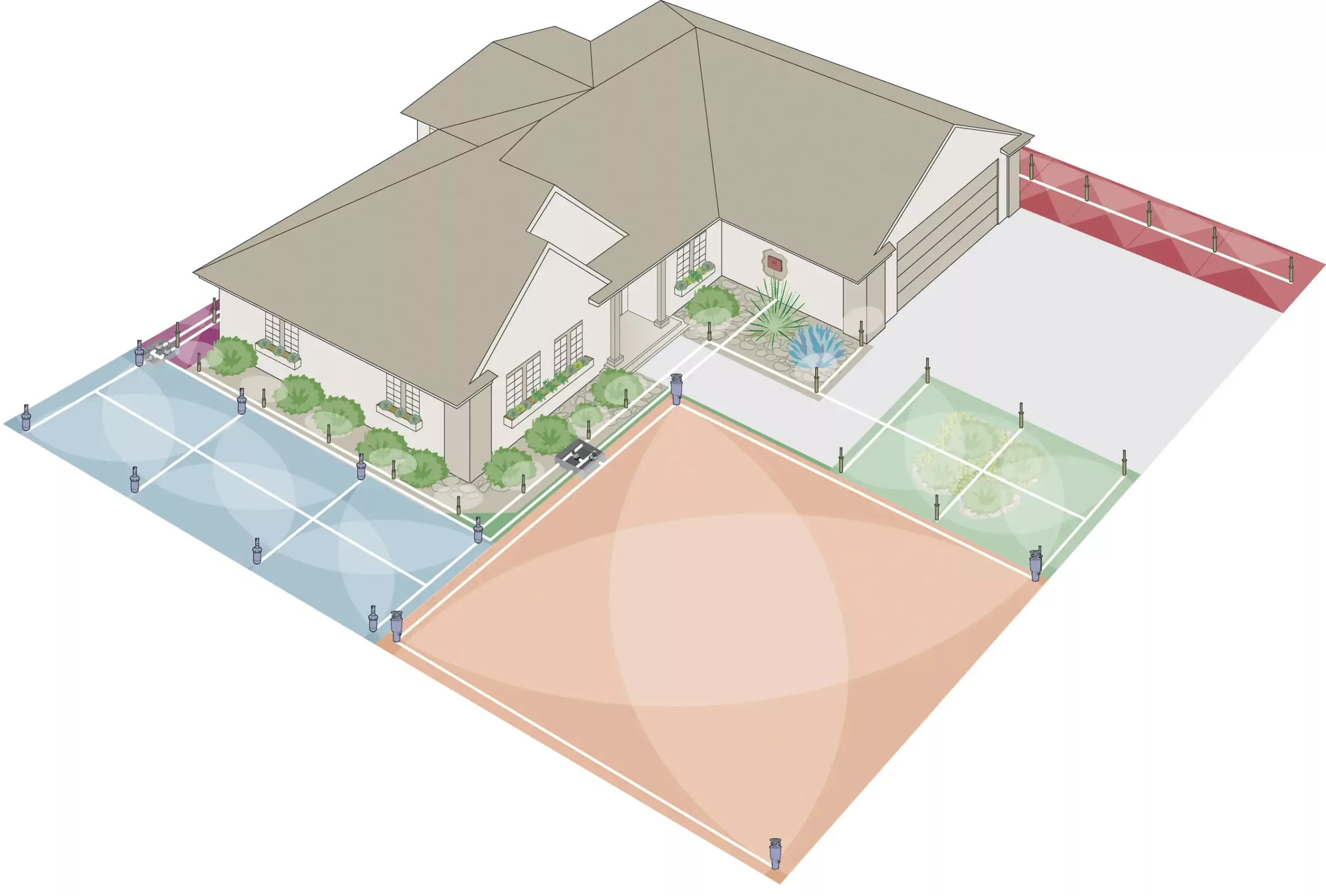
A sprinkler system layout starts with grouping areas that have similar watering needs. For example, turf, shrubs, flower beds, and shaded areas should usually be separated so each zone can be adjusted for the right amount of water.
What to Mark on the Plan
- Property boundaries and hardscape edges
- Planting areas, lawn sections, and tree locations
- Water source, backflow device, and controller location
- Sprinkler head types and their spray patterns
- Valve locations and zone numbers
Why Accurate Mapping Matters
Clear zone mapping helps reduce overspray, avoid dry spots, and make adjustments easier later. It also supports better water use and cleaner coverage across the yard.
For Dallas Landscape & Irrigation, a well-planned sprinkler system layout is the foundation of a reliable irrigation setup. If you want help organizing your yard into efficient watering zones, request an estimate.
What you get in an irrigation blueprint
An irrigation blueprint is a detailed plan that shows how a sprinkler or drip system should be organized before any work begins. At Dallas Landscape & Irrigation, the blueprint is used to help guide an efficient, cleanly designed system for your property.
Depending on the site, an irrigation blueprint may include:
- Property measurements and landscape areas
- Zone groupings for turf, beds, and specialty plants
- Head and emitter locations
- Pipe routing and valve placement
- Controller notes and smart watering recommendations
- Backflow and water supply details
This type of plan helps reduce guesswork during installation and gives a clear reference for future changes or troubleshooting. It is also useful for homeowners, builders, and landscape crews who need a practical, easy-to-follow irrigation roadmap.
If you want a professionally prepared irrigation blueprint for your Dallas property, request an estimate from Dallas Landscape & Irrigation.
Dry spots usually show up as irregular patches of brown grass, wilted plants, or areas that stay noticeably drier than the rest of the yard. A quick way to check is to run your system and watch for water reaching every part of the lawn evenly. If you see overspray in some areas and weak coverage in others, the layout may need adjustment.
Common signs of poor coverage
- Brown or thinning patches between sprinkler arcs
- Runoff or pooling in one area while another stays dry
- Missed corners near walkways, fence lines, or garden beds
- Uneven growth across the lawn
What to do next
Check nozzle type, head placement, spacing, and pressure to see whether the system is matching your landscape shape. In many cases, a small adjustment can improve coverage without replacing the whole system. Dallas Landscape & Irrigation can evaluate your spray pattern and help identify where the design is falling short. If you want a professional review, request an estimate today.
Role of an Irrigation Design Consultant
An irrigation design consultant evaluates your property and creates a watering plan that matches your landscape, water source, and long-term goals. The focus is on efficient coverage, healthy plant growth, and a system layout that is practical for your site.
At Dallas Landscape & Irrigation, our consultants help with:
- Site review and landscape analysis
- Zone planning for turf, beds, shrubs, and specialty areas
- Head and emitter selection for proper coverage
- Pressure and flow considerations for reliable performance
- Controller and scheduling recommendations
Why This Matters
A well-developed irrigation design can reduce dry spots, runoff, and uneven watering. It also helps support plant health by matching water delivery to the needs of each area instead of using a one-size-fits-all approach.
If you want a system designed for your property in Dallas, request an estimate from Dallas Landscape & Irrigation. We can help you plan a solution that fits your landscape and supports dependable, efficient watering.
Tailored to Your Property
A custom irrigation design is built around your property’s specific layout, plant types, sun exposure, soil conditions, and water pressure. Instead of using a one-size-fits-all approach, Dallas Landscape & Irrigation creates a plan that matches the areas that need water most and avoids overwatering spots that don’t.
Why It Matters
- Better coverage: Each zone is planned to water evenly and efficiently.
- Healthier landscaping: Turf, shrubs, and beds can be watered according to their needs.
- Less waste: A custom layout helps reduce runoff, overspray, and uneven watering.
- Improved control: The system can be designed around slopes, shade, and hard-to-reach areas.
What to Expect
A professional design should include a zone breakdown, sprinkler head placement, and equipment selected for your site conditions. Dallas Landscape & Irrigation can help you build a system that performs well from the start.
If you’re planning a new system or upgrading an existing one, request an estimate to get started.
Why rain sensors matter
Rain sensors help a landscape watering system pause automatically when enough natural rainfall has already reached the soil. That means less runoff, fewer wasted cycles, and better protection for lawns, beds, and shrubs during wet weather.
Key benefits
- Reduces overwatering by stopping irrigation after rain
- Supports healthier plants by avoiding soggy soil
- Helps lower water use during frequent storms
- Improves system efficiency without requiring daily manual changes
What to look for
For best results, rain sensors should be paired with a well-designed irrigation setup and placed where they can accurately detect rainfall. In Dallas, weather can change quickly, so this added control is especially useful for keeping landscape water management more precise throughout the season.
If you want help improving your irrigation controls or adding weather-based features, Dallas Landscape & Irrigation can help. You can request an estimate to get started.
Planning the System
A sprinkler system plan starts with a site review of your yard’s shape, slope, sun exposure, soil conditions, and planting areas. Dallas Landscape & Irrigation maps where water is needed most and identifies the best places for heads, valves, and main lines.
What the Plan Includes
- Coverage zones: Areas are divided so grass, beds, and hard-to-reach spots can be watered correctly.
- Head selection: The right spray or rotor heads are chosen for each section.
- Water use strategy: The layout is designed to reduce runoff and avoid dry spots.
- Pressure and flow review: The system is matched to the property’s available water supply.
Why a Good Plan Matters
A well-built plan helps your system run evenly, protects landscape health, and supports efficient watering from day one. It also makes future adjustments easier if your yard changes.
If you are starting a new project or updating an existing layout, Dallas Landscape & Irrigation can help you plan it properly. You can request an estimate to get started.
Best Plant Types for Drip Irrigation
Drip irrigation works especially well for plants that benefit from slow, targeted watering at the root zone. It is a strong choice for:
- Shrubs and foundation plantings that need steady moisture without wetting leaves
- Flower beds and perennial borders where consistent watering supports healthier blooms
- Vegetable gardens that do best with even soil moisture
- Young trees that need deep watering during establishment
- Container plants that dry out quickly in Dallas heat
When Drip Irrigation Is a Smart Choice
Drip irrigation is useful when you want to reduce overspray, limit evaporation, and deliver water only where plants can use it. Dallas Landscape & Irrigation often recommends it for beds with mixed plantings, narrow landscape strips, and areas where sprinkler spray would hit sidewalks, fences, or hardscape.
It is less ideal for turfgrass, which usually needs a different watering method. A well-planned system can combine drip and spray zones so each part of the landscape gets the right amount of water.
If you want help choosing the right setup for your property, request an estimate from Dallas Landscape & Irrigation.
Water efficient irrigation is a watering approach that delivers the right amount of water to plants with as little waste as possible. It focuses on matching watering to soil, plant type, sun exposure, and seasonal weather so landscapes stay healthy without overwatering.
How it works
- Targeted delivery: Water is applied only where plants need it.
- Better scheduling: Run times are adjusted to avoid unnecessary watering.
- Reduced runoff: Systems are set up to limit overspray and pooling.
- Efficient hardware: The right nozzles, drip lines, and controls help conserve water.
Why it matters
Efficient irrigation can lower water use, support healthier roots, and reduce stress on turf and plants during hot Dallas weather. It also helps prevent common problems like soggy soil, fungal growth, and water waste from poor coverage.
At Dallas Landscape & Irrigation, we design and fine-tune systems to use water wisely while keeping your landscape looking its best. If you want a smarter setup for your property, request an estimate.
Smart controllers use local weather data to decide when and how long to water. Instead of following a fixed schedule, they can adjust for rainfall, temperature, wind, humidity, and seasonal changes so your landscape gets the right amount of moisture.
How it works
- Rain detection: Watering pauses or reduces after recent rain.
- Temperature and humidity: The system shortens or extends run times based on drying conditions.
- Wind awareness: In stronger wind, watering may be delayed to reduce drift and overspray.
- Seasonal updates: Schedules can shift as Dallas weather changes through the year.
Why it matters
This kind of control helps prevent overwatering, supports healthier turf and plants, and can lower water use without constant manual adjustments. For Dallas Landscape & Irrigation, smart irrigation design is about making your system respond to real site conditions, not guesswork.
If you want a system tuned for your property, request an estimate and we can help plan the right setup.
Why Professional Planning Matters
Hiring Dallas Landscape & Irrigation for irrigation planning services helps ensure your system is designed for efficient water use, even coverage, and reliable performance. A professional plan reduces guesswork and helps avoid common issues like overwatering, dry spots, and uneven zone performance.
When you work with a local team, you also get a plan that fits your property’s layout, plant needs, and water source conditions. That means the system can be organized to support healthier turf and landscaping while keeping water use more controlled.
What You Gain
- Better coverage across lawns, beds, and specialty planting areas
- More efficient water use with zone planning that matches plant needs
- Fewer design mistakes that can lead to wasted water or weak performance
- A smoother project process with clear recommendations before installation
If you want a system planned with local experience and practical detail, Dallas Landscape & Irrigation can help. Request an estimate to get started.
Sprinkler head placement around trees and shrubs should protect the plant roots while still giving nearby turf the water it needs. The goal is to place heads so spray lands on the lawn, not directly on trunks, mulch beds, or foliage that does not need frequent watering.
Good placement practices
- Keep heads clear of tree trunks: Avoid placing heads where water constantly hits bark or pools at the base.
- Match the spray to the area: Use a pattern that waters grass edges cleanly without overspray into planting beds.
- Protect shrubs from overwatering: Many shrubs do better with separate watering methods or adjusted coverage.
- Account for canopy growth: As trees and shrubs mature, head placement may need to be updated to prevent blocked spray.
For Dallas properties, smart sprinkler head placement helps reduce dry spots, runoff, and wasted water while keeping landscapes healthier. Dallas Landscape & Irrigation can review your layout and recommend practical adjustments for better coverage. If you are planning a new system or improving an existing one, request an estimate today.
Why layout matters
A poor irrigation layout design can leave some areas too dry while others get overwatered. That imbalance stresses turf, shrubs, and flower beds, which can lead to weak roots, patchy growth, fungus, and higher water bills.
Common problems caused by a weak layout
- Uneven coverage that creates dry spots and soggy zones
- Overspray onto sidewalks, driveways, or patios
- Poor matching of heads and zones, which affects how evenly water is applied
- Runoff on slopes or compacted soil
- Missed plant needs when beds and turf are grouped together incorrectly
What a better plan does
With a thoughtful design, water is directed where it belongs, matched to plant type, and distributed more evenly across the property. That helps improve root development, reduce waste, and keep the landscape looking healthier through Dallas heat.
If you want a layout that supports healthier plants and better efficiency, request an estimate from Dallas Landscape & Irrigation.
Designing for Slopes
A sloped yard needs a lawn sprinkler design that controls runoff and helps water soak in evenly. Dallas Landscape & Irrigation plans slope-friendly systems by placing zones and sprinkler heads so water is applied in shorter cycles instead of all at once.
What Works Best
- Matched precipitation rates: Helps each area receive water at the same pace.
- Smaller watering cycles: Reduces pooling and runoff on inclines.
- Careful head placement: Improves coverage along grade changes and hilltops.
- Proper nozzle selection: Supports gentler application where water can move quickly downhill.
Helpful Design Tips
For sloped lawns, the goal is to keep water where roots can use it. A good layout may include check valves, adjusted arc patterns, and separate zones for steep sections. That way, your system can deliver more consistent results without wasting water.
If you want a professional lawn sprinkler design for a sloped property, Dallas Landscape & Irrigation can help. Request an estimate to get started.
Recommended inspection schedule
Automatic sprinkler systems should be inspected at least twice a year, with a quick visual check after major weather changes, heavy use, or storms. In Dallas, seasonal shifts can affect spray patterns, controller settings, and overall performance, so regular inspections help keep the system working as intended.
What to look for
- Broken or clogged heads that reduce coverage
- Leaking valves or fittings that waste water
- Uneven spray patterns caused by shifting heads
- Controller errors or incorrect run times
- Dry or soggy spots that may signal a problem underground
Why it matters
Routine inspections can catch small issues before they turn into bigger repairs, help protect your landscape, and improve water efficiency. If your system is skipping areas, running too long, or showing signs of wear, Dallas Landscape & Irrigation can help evaluate the setup and make needed adjustments. To get started, request an estimate.
Yes, when it is engineered for the site
A well-planned commercial sprinkler design can significantly reduce water waste by matching spray patterns, runtimes, and coverage to the actual needs of your property. At Dallas Landscape & Irrigation, we design systems with efficiency in mind so your landscape gets the right amount of water without unnecessary runoff or overspray.
Key ways water waste is reduced
- Proper head selection: Uses the right sprinkler type for turf, beds, slopes, and narrow areas.
- Matched precipitation: Helps different zones apply water evenly.
- Smart zoning: Separates areas with different sun exposure, soil conditions, and plant needs.
- Efficient coverage: Reduces dry spots and double watering.
- Control adjustments: Supports better scheduling based on seasonal conditions.
Why it matters for commercial properties
Lower water waste can help protect landscaping, support more consistent growth, and reduce unnecessary irrigation use across large or high-traffic sites. It also helps create a cleaner, more professional appearance for customers, tenants, and visitors.
If you want a more efficient system for your business landscape, request an estimate from Dallas Landscape & Irrigation.
Why pressure matters
Water pressure affects how evenly your irrigation system performs. If pressure is too low, heads may not pop up fully or cover the area consistently. If it is too high, misting, runoff, and wasted water can become a problem.
How it is evaluated
In a proper irrigation system design, the designer reviews the available water supply and measures the pressure at the site. They also look at flow rate, pipe sizing, valve placement, and the type of spray heads or rotors being used. These details help determine whether pressure needs to be reduced or balanced across zones.
What a good design does
- Matches sprinkler heads to the actual water pressure
- Divides the system into zones that operate efficiently
- Reduces uneven watering and overspray
- Supports healthier turf and plants with less waste
At Dallas Landscape & Irrigation, pressure review is part of creating a reliable irrigation plan for your property. If you want a system designed for better performance and water efficiency, request an estimate.
When drip irrigation makes sense
Drip irrigation is often a smart part of Landscape Irrigation Design because it delivers water slowly and directly to the root zone. That makes it a strong choice for planting beds, shrubs, groundcover, trees, and areas where overspray could waste water or hit hardscape.
Where it works best
- Foundation beds and narrow side yards
- Tree rings and shrub groupings
- Mulched beds with mixed plant types
- Sloped areas where runoff is a concern
Why it matters in a full design
A good design balances drip zones with spray or rotor zones so each part of the landscape gets the right amount of water. Dallas Landscape & Irrigation can plan the layout so drip components are grouped logically, pressure needs are accounted for, and the system works efficiently across the property.
If you want a tailored plan for your yard, request an estimate from Dallas Landscape & Irrigation.
HOA Compliance and Sprinkler Design
If your property has an HOA, your sprinkler design may need to follow specific rules for coverage, water use, and placement. Dallas Landscape & Irrigation can help you create a design that supports your landscape goals while staying aligned with common HOA requirements.
We typically review:
- Head placement near sidewalks, driveways, and property lines
- Coverage for turf, beds, and other landscaped areas
- Visible equipment placement and curb appeal concerns
- Watering efficiency to help avoid runoff and overspray
It is a good idea to check your HOA documents before installation begins. If you already have HOA guidelines, share them with Dallas Landscape & Irrigation so the sprinkler design can be planned with those standards in mind.
Need help getting started? Our team can review your project and help you move forward with confidence. Request an estimate today.
Typical Timeline
The timeline for irrigation planning services depends on the size of your property, the number of planting areas, and whether an existing system needs to be reviewed. In many cases, Dallas Landscape & Irrigation can complete the planning phase in a short turnaround once site details are available.
What Affects the Schedule
- Property size: Larger or more complex sites take longer to evaluate.
- Current conditions: Existing irrigation lines, plant beds, slopes, and shaded areas may require extra planning.
- Project goals: Some plans focus on water efficiency, while others prioritize coverage or future expansion.
- Review and approval: Finalizing the plan may take additional time if changes are requested.
For Dallas property owners, a clear plan helps reduce delays later in the project and makes it easier to move into installation or improvements with confidence. Dallas Landscape & Irrigation provides practical planning support tailored to your landscape goals.
If you want a timeline estimate for your property, request an estimate today.
Sprinkler Head Spacing Basics
Sprinkler head spacing should be set so each spray pattern slightly overlaps the next one. This helps avoid dry spots and keeps water distribution more even across the lawn. In general, heads are placed based on their spray radius, nozzle type, water pressure, and the shape of the area being irrigated.
Good spacing usually depends on:
- Head-to-head coverage for consistent overlap
- Spray radius and arc selection
- Water pressure and flow rate
- Turf, shrubs, and hardscape edges
For best results, heads should not be spaced too far apart or aimed directly onto sidewalks, driveways, or structures. Proper placement also helps reduce overspray and runoff, especially in Dallas where weather and soil conditions can affect irrigation performance.
If you are planning a new system or adjusting an existing one, Dallas Landscape & Irrigation can evaluate the layout and recommend the right head spacing for your property. To get started, request an estimate.
Plan Components
An irrigation layout design plan maps out how water will be distributed across your property for even, efficient coverage. At Dallas Landscape & Irrigation, a professional plan typically includes:
- Head placement for sprinklers and drip lines
- Pipe routing to connect each watering area
- Valve locations for controlling separate sections
- Controller placement for easy system management
- Backflow prevention and other code-related components
Why It Matters
A detailed layout helps reduce overspray, dry spots, and unnecessary water use. It also makes the system easier to install, service, and adjust as your landscape changes.
Whether you are planning a new system or updating an existing one, Dallas Landscape & Irrigation can create a layout tailored to your property’s shape, plantings, and water needs. Request an estimate to get started.
Planning the zone layout
A smart lawn sprinkler design starts with dividing your yard into zones that match water needs, sun exposure, and sprinkler head type. At Dallas Landscape & Irrigation, we map each area so turf, shrubs, and narrow strips are watered separately for better control and more even coverage.
Common steps in a zone plan include:
- Grouping similar plant areas together
- Separating sunny and shaded sections when needed
- Matching spray heads, rotors, or drip lines to each zone
- Balancing water pressure and flow across the system
- Reducing overspray onto sidewalks, driveways, and buildings
Good zone planning also helps avoid weak spots and dry patches by keeping each zone within a workable size and shape. This makes the system easier to control and more efficient over time.
If you want a professionally planned layout for your yard, Dallas Landscape & Irrigation can help. Request an estimate to get started.
Automatic sprinkler systems help large yards get even, consistent watering without the guesswork of moving hoses or relying on manual watering. For bigger properties, the key advantage is coverage: zones can be laid out so every part of the lawn receives the right amount of water based on sun exposure, slope, and plant type.
Why coverage matters
- Reduces dry spots and overwatered areas
- Supports healthier turf growth across wide spaces
- Helps water hard-to-reach sections more reliably
- Improves efficiency by watering only where needed
How Dallas Landscape & Irrigation helps
Dallas Landscape & Irrigation designs automatic sprinkler systems to match the layout of your property, so spray patterns and head placement work together for more uniform coverage. That means fewer missed areas and less water waste over time.
If your lawn has open stretches, corners, or uneven terrain, a professionally planned system can make a noticeable difference in results. To get started, request an estimate from Dallas Landscape & Irrigation.
A commercial sprinkler design plan outlines how a property will be irrigated with efficient water coverage and reliable system performance. For Dallas Landscape & Irrigation, the process is built around your site’s layout, landscape needs, and water-use goals.
Typical plan elements
- Site review: We evaluate turf areas, planting beds, sun exposure, slopes, and hardscape.
- Zone layout: The system is divided into zones so similar areas receive the right amount of water.
- Head placement: Sprinkler heads are positioned for even coverage and reduced overspray.
- Water supply planning: We account for available pressure, flow, and system capacity.
- Controller and scheduling: The design supports practical watering control for commercial use.
A strong design helps reduce waste, improve plant health, and support a cleaner, more professional property appearance. It also makes future adjustments easier if your landscape changes.
If you need a commercial sprinkler design in Dallas, Dallas Landscape & Irrigation can help you plan a system that fits your property. To get started, request an estimate.
Permit and code compliance
In many Dallas-area projects, residential sprinkler design must follow local plumbing and irrigation code requirements, and some jobs may require a permit or inspection before work begins. The exact rules can depend on your property, system scope, and whether the project includes new lines, backflow protection, or major changes to an existing setup.
Dallas Landscape & Irrigation helps homeowners plan systems with compliance in mind so the design supports a smooth approval process and avoids delays. A proper design typically includes:
- sprinkler head placement that matches the property layout
- zone planning based on system flow and pressure
- backflow and controller considerations
- documentation needed for a clean installation review
Because requirements can vary, it is smart to confirm the permit path before installation starts. If you want a design that is practical, code-aware, and tailored to your yard, request an estimate from Dallas Landscape & Irrigation.
Why choose a smart irrigation design?
A smart Irrigation System Design can improve water efficiency by adjusting watering schedules based on weather, soil conditions, and plant needs. This helps reduce waste, supports healthier turf and landscape areas, and can make your system easier to manage over time.
For property owners in North Texas, smarter planning matters because local conditions can change quickly. Dallas Landscape & Irrigation designs systems that aim to deliver the right amount of water where it is needed, while avoiding overspray and runoff.
Common advantages
- Better water control: Uses modern scheduling and zone planning to reduce overwatering.
- Healthier landscaping: Helps keep grass, shrubs, and beds consistently hydrated.
- Convenience: Makes irrigation easier to monitor and adjust.
- Efficiency: Supports lower water use by responding to changing conditions.
If you want a system designed with efficiency and long-term performance in mind, Dallas Landscape & Irrigation can help. Request an estimate to discuss a smart irrigation plan for your property.
A well-planned landscape irrigation design divides your property into zones so each area gets the right amount of water without waste. Turf, shrubs, flower beds, and shaded areas all have different needs, and a smart layout helps match sprinkler heads, drip lines, and scheduling to those conditions.
What a good zone plan includes
- Turf zones for open lawn areas that need even coverage
- Drip irrigation for beds, trees, and foundation plantings
- Sun and shade adjustments to account for evaporation and soil moisture
- Matched precipitation so each zone applies water at an appropriate rate
This approach can improve plant health, reduce runoff, and help prevent overwatering in some areas while underwatering others. It also makes it easier to fine-tune watering as your landscape changes over time.
At Dallas Landscape & Irrigation, we design irrigation systems with zone efficiency in mind so your landscape can be watered more precisely. If you want a plan tailored to your property, request an estimate.
Key design factors
A good sprinkler design starts with how your property actually uses water. Dallas Landscape & Irrigation looks at the layout, plant types, sun exposure, soil conditions, and water pressure before planning zones. These details help create even coverage and reduce dry spots, runoff, and overspray.
- Lawn and planting areas: Turf, shrubs, and flower beds often need different watering patterns.
- Sun and shade: Areas with full sun usually need more water than shaded areas.
- Slope and drainage: Sloped sections may need shorter cycles to prevent water loss.
- Water pressure and flow: These determine how many heads can run efficiently in each zone.
- Head spacing and nozzle choice: Proper matching helps water land where it should.
The best sprinkler design also takes future growth and access into account, so the system can perform well as your landscape changes. If you want a plan tailored to your property, Dallas Landscape & Irrigation can help you request an estimate.
