When water moves the wrong way inside a plumbing system, it can create real problems for a home, business, or irrigation setup. Backflow prevention testing is the best way to confirm that your device is doing its job and protecting your clean water supply. For property owners in Forney, regular testing is also part of staying ahead of local compliance requirements and avoiding avoidable service interruptions.
Our approach is straightforward: check the backflow assembly, verify that it opens and closes properly, document the results, and help you understand what comes next if repairs or replacement are needed. Whether you manage a storefront, a rental property, or a single-family home with irrigation, having a dependable local team makes the process simpler and less stressful. In a growing community like Forney, it pays to keep your plumbing systems in good shape and your water protected.
Why backflow testing matters
Backflow prevention devices are designed to keep contaminated water from flowing into the clean water supply. That matters anywhere a property has irrigation, fire suppression equipment, boilers, commercial plumbing, or other cross-connection risks. A device can look fine from the outside and still fail under pressure, so scheduled testing is the only reliable way to know it is working correctly.
In Forney, where neighborhoods continue to expand and many properties rely on sprinkler systems and modern plumbing upgrades, routine testing helps protect water quality and keeps owners in step with local rules. It also helps catch small issues early, before they turn into leaks, pressure problems, or more costly repairs.
Who needs backflow prevention testing?
Testing is commonly needed for:
- Commercial properties and office buildings
- Restaurants, retail spaces, and service businesses
- Apartment communities and rental homes with irrigation systems
- Residential homes with sprinkler systems, pools, or auxiliary water features
- Properties with fire lines or other specialized plumbing equipment
If your property has a backflow assembly, annual testing is usually part of responsible maintenance. Many owners also schedule service after repairs, new installations, or any plumbing work that could affect system pressure.
What the testing process looks like
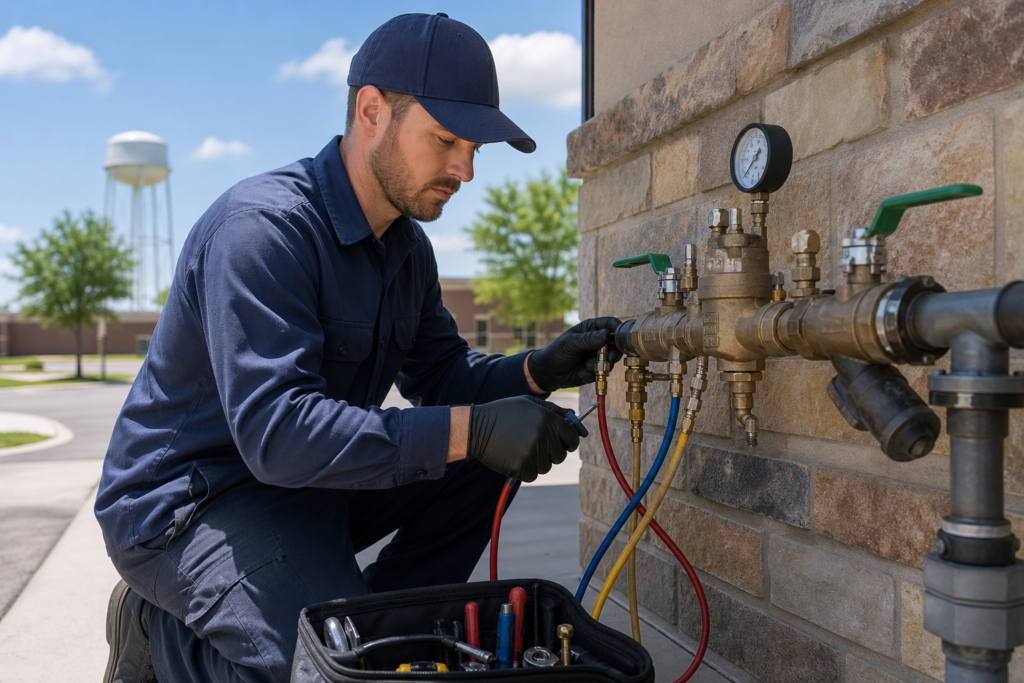
Backflow testing is a careful, technical process, but it should not feel complicated for the property owner. A qualified technician connects specialized gauges to the device and checks whether the assembly opens, closes, and holds pressure as required. The goal is to confirm that water can flow in the correct direction while preventing reverse flow.
If the device passes, the technician documents the result for your records and for any required reporting. If it fails, you will know what needs attention right away. In many cases, a repair can solve the issue. If the assembly is worn out or damaged, replacement may be the better long-term option.
Local advantages for Forney property owners
Working with a local provider offers practical benefits. Forney properties often face a mix of residential irrigation, new construction plumbing, and busy commercial water use. That means the right testing service should understand both the equipment and the local expectations around compliance and scheduling.
Local service can also make the process easier when you need prompt follow-up. If a device fails, you want someone who can explain the problem clearly, recommend next steps, and help you get back in service without unnecessary delays. That is especially important for businesses that depend on daily operations and for homeowners who want their sprinklers or outdoor water features ready when needed.
Common signs a backflow device may need attention
Not every failed device shows obvious warning signs, but these issues can point to a problem:
- Leaks or dripping around the assembly
- Unusual pressure changes in the plumbing system
- Visible corrosion, wear, or broken parts
- Sprinkler zones that do not perform as expected
- Past-due testing or missing service records
If you notice any of these concerns, it is a good time to schedule an inspection. Catching a problem early can help avoid water waste, unexpected shutdowns, and possible contamination risks.
What residents and businesses can expect from service
A reliable backflow testing visit should be organized, respectful of your property, and focused on accuracy. That means the technician arrives prepared, tests the assembly correctly, explains the outcome in plain language, and helps you understand whether any repairs are needed. For commercial clients, good recordkeeping matters just as much as the test itself, especially when compliance documentation must be submitted on time.
For homeowners in Forney, the benefit is peace of mind. For business owners, the benefit is continuity and fewer surprises. In both cases, regular testing helps protect the water supply and support the long-term health of your plumbing system.
When to schedule testing
It is smart to schedule backflow prevention testing:
- Once a year, or as required by local regulations
- After a repair or replacement
- When buying or selling a property with a backflow device
- Before peak irrigation season
- If you have concerns about system performance
Planning ahead is the easiest way to stay compliant and avoid last-minute stress. For many property owners, annual testing becomes a simple part of routine property maintenance.
Serving Forney and Nearby Communities
Forney is one of the fastest-growing communities in Kaufman County, with a mix of established neighborhoods, new subdivisions, and expanding commercial areas. Residents know the city for places like downtown Forney, the community around Forney Community Park, and easy access to everyday shopping and business corridors. Nearby areas such as Talty, Heartland, and parts of eastern Mesquite also rely on dependable plumbing and water protection services.
That local growth matters when it comes to backflow prevention testing. New irrigation systems, commercial buildouts, and neighborhood water features can all create cross-connection risks if devices are not tested regularly. Hot Texas summers, sudden rainstorms, and seasonal sprinkler use can also put added pressure on plumbing components. Local experience helps because the service needs to fit how properties in this area are actually used, maintained, and inspected.
Whether you manage a home, rental property, or business in Forney, having a nearby team that understands local conditions makes testing simpler. It means faster scheduling, clearer communication, and support that is practical for residents across Forney and the surrounding communities.