Keeping your water supply protected starts with a backflow device that works the way it should. In Preston Hollow, many homes, estates, and commercial properties rely on irrigation systems, fire lines, pools, and other plumbing connections that can create cross-connection risks if backflow protection is overlooked. Regular testing helps confirm that contaminated water is not being pulled back into the clean water line during pressure changes, repairs, or heavy water use.
For property owners in Preston Hollow, routine backflow testing is more than a box to check. It supports safer drinking water, helps maintain compliance with local utility requirements, and gives you a clear picture of whether your assembly is operating properly. Whether you manage a large residence, a neighborhood association, or a business property, having a qualified local technician handle the testing makes the process simpler and more dependable.
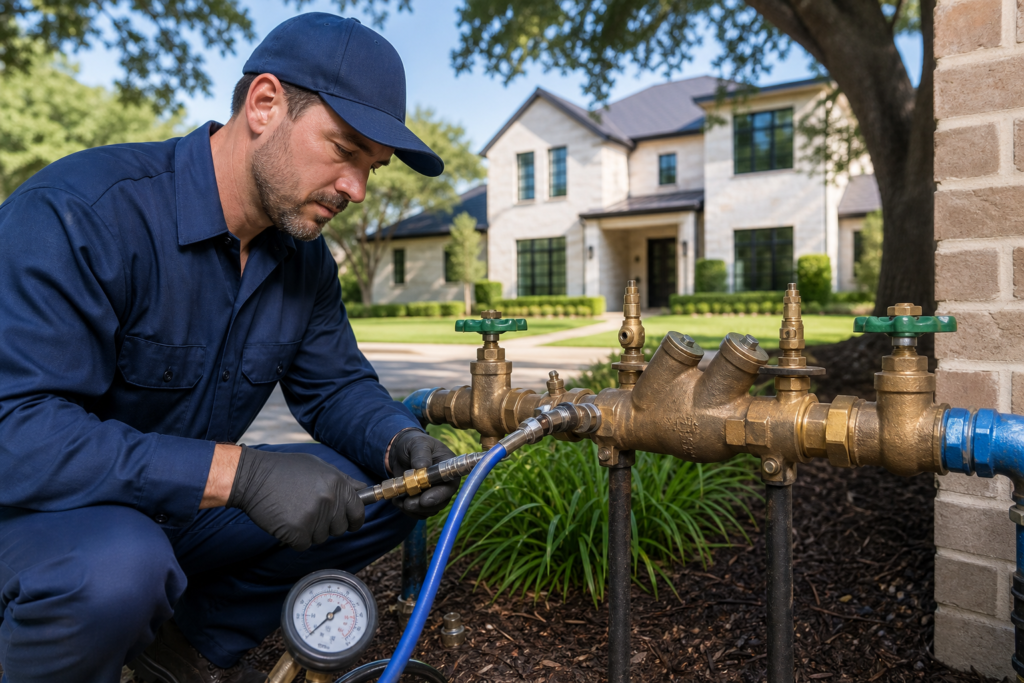
Reliable Backflow Testing for Preston Hollow Properties
Backflow prevention testing is an important part of maintaining a safe water system. In a neighborhood like Preston Hollow, where properties often include landscaped grounds, irrigation systems, pools, and multiple plumbing connections, there are several ways pressure changes can create a backflow risk. A properly tested and functioning assembly helps keep non-potable water from entering the clean water supply.
Backflow testing is typically required on a recurring schedule, and the exact timing may depend on the device type and local water utility rules. The process is straightforward when handled by a trained professional: the assembly is inspected, tested with the proper equipment, and documented so you know whether it passed or needs repair.
Why local residents schedule backflow testing
Property owners in Preston Hollow often choose scheduled testing because it helps prevent bigger problems later. A failed device may not show obvious signs right away, but if it is not working correctly, the risk to your water quality can increase. Regular testing helps identify worn parts, stuck valves, debris, or pressure issues before they become costly compliance or plumbing concerns.
- Protects drinking water from contamination
- Helps meet local testing and inspection requirements
- Identifies repair needs before system failure
- Supports irrigation, commercial, and residential plumbing safety
- Provides documentation for property records and utility compliance
Common devices that may need testing
Different properties use different backflow assemblies, and each one should be tested by someone who understands how the equipment works. Common systems include reduced pressure zone assemblies, double check valve assemblies, and pressure vacuum breakers. The right device depends on the property’s plumbing layout, irrigation setup, and level of risk.
If you are not sure which assembly is installed on your property, a local technician can identify it, explain how it functions, and recommend a testing schedule that fits your system.
What to expect during the testing visit
Backflow testing is usually a noninvasive service, but it does require specialized gauges and careful handling. A trained tester will isolate the device, check its performance under pressure, and verify that each component closes or opens as designed. If the assembly passes, you receive the needed documentation. If it fails, the technician can explain the problem and discuss repair or replacement options.
For many Preston Hollow homeowners and property managers, the biggest benefit is peace of mind. You know the device has been checked by someone who understands local requirements and can spot issues specific to North Dallas plumbing systems, irrigation demand, and seasonal water use.
Local advantages of working with an experienced technician
Local experience matters because Preston Hollow properties can vary widely. Some homes have extensive outdoor watering systems. Others have older plumbing components, detached structures, or commercial-grade water features that need careful attention. A technician familiar with the area can plan service efficiently and help keep your property on schedule.
Working with a nearby provider also makes follow-up easier if repairs are needed. That matters during peak irrigation season, after plumbing changes, or when a device fails and needs prompt attention to stay compliant.
Service is commonly available for:
- Single-family homes
- Large residential estates
- HOA-managed communities
- Office and retail properties
- Schools, churches, and mixed-use sites
Keep your system ready year-round
Backflow prevention is not something to check once and forget. Seasonal watering, freeze concerns, and normal wear can all affect performance over time. Routine testing helps keep your system ready through North Texas heat, sudden weather shifts, and periods of heavy water use. If your assembly is due for inspection, scheduling service now can help you avoid lapses and keep your property protected.
For Preston Hollow residents, the goal is simple: safe water, fewer surprises, and a backflow system that does its job when it matters most.
About Preston Hollow, TX
Preston Hollow is an established neighborhood in Dallas known for its large residential lots, mature trees, and a mix of private estates, modern homes, and nearby commercial corridors. While population figures are generally discussed as part of the larger Dallas area rather than the neighborhood itself, Preston Hollow is widely recognized as one of North Dallas’s most distinctive communities.
The area includes nearby communities and service areas such as North Dallas, University Park, Highland Park, Bluffview, and the broader Preston Road corridor. Residents spend time near local shopping and dining areas, neighborhood parks, and major routes that connect the community to the rest of the city. That mix of residential and commercial plumbing systems makes backflow prevention especially important here.
Hot summers, heavy irrigation needs, and occasional winter freezes can all affect plumbing performance in Preston Hollow. Local experience matters because technicians understand how these conditions, along with common property layouts in the area, can influence backflow testing and follow-up service.