Clean, reliable water starts with a system that keeps contaminated water from reversing direction and entering your drinking supply. In a city like Dallas, where homes, commercial buildings, irrigation systems, and mixed-use properties all depend on dependable plumbing, backflow prevention testing is an important part of staying safe and compliant. Whether you manage a single-family home, apartment community, office building, restaurant, or industrial site, regular testing helps confirm that your backflow preventer is working as it should.
If your property has irrigation, fire suppression, boiler systems, or other cross-connection risks, local testing is not something to put off. A properly tested and maintained assembly can help protect your water quality, reduce the chance of service interruptions, and keep you in step with municipal requirements. Working with a local professional also means getting familiar guidance on the type of device you have, the testing schedule you need, and any repairs that may be needed to keep everything operating smoothly.
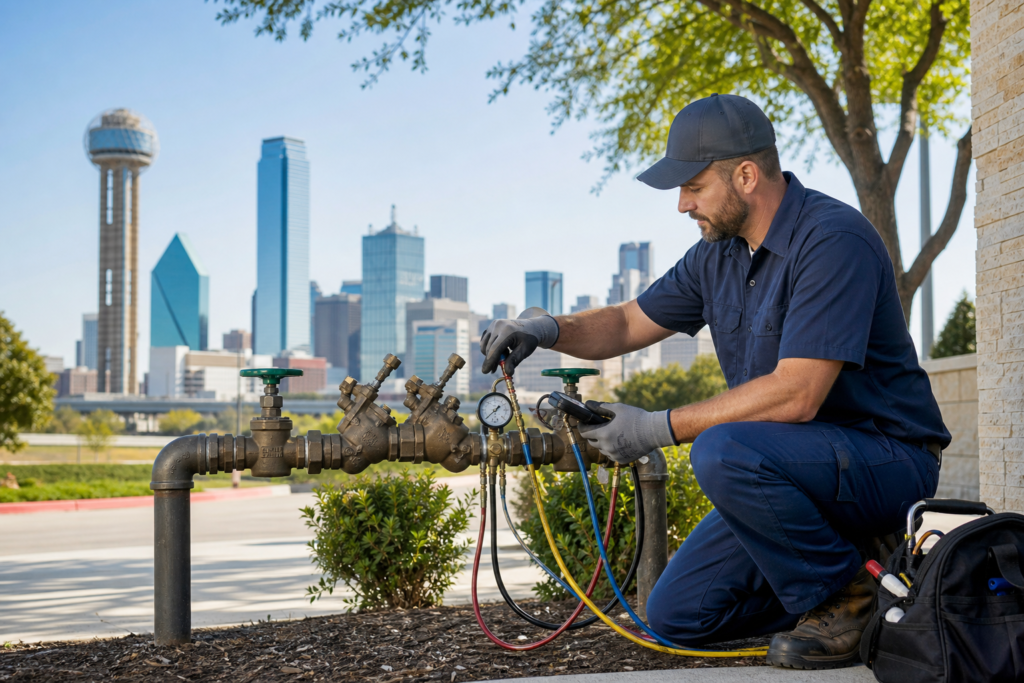
Why backflow testing matters in Dallas
Backflow happens when pressure changes cause water to flow in the wrong direction. That can allow fertilizers, stagnant water, cleaning chemicals, or other contaminants to enter the potable water supply. In a large city with dense neighborhoods, active commercial districts, and a wide range of plumbing systems, backflow prevention testing is one of the simplest ways to reduce that risk.
For Dallas property owners, testing is especially important because many systems are tied to irrigation, fire protection, and commercial water use. Backflow preventers are designed to protect the public water system, but like any mechanical device, they need to be checked by a qualified tester to confirm they are sealing, holding pressure, and functioning properly.
Who needs backflow prevention testing?
Many properties in Dallas benefit from scheduled testing, including:
- Residential homes with irrigation systems or pools
- Multi-family buildings and apartment communities
- Restaurants, retail spaces, and office buildings
- Warehouses, light industrial facilities, and service shops
- Schools, healthcare facilities, and places of worship
- Properties with fire sprinklers, boilers, or dedicated water systems
If your site has any kind of cross-connection risk, testing may be required by the city, your water provider, or a property insurance or compliance program. A local specialist can help you understand what applies to your property and keep your records organized.
What the testing process involves
Backflow prevention testing is a straightforward process when handled by an experienced professional. The tester will access the assembly, connect calibrated equipment, and measure how the device performs under pressure. The goal is to verify that the unit is protecting the water supply the way it was designed to.
In many cases, the visit includes:
- Locating and identifying the backflow assembly
- Testing the device with approved gauge equipment
- Checking shutoff valves, relief ports, and internal components
- Explaining the results in clear terms
- Recommending repairs if the assembly does not pass
- Submitting paperwork when required
If the device fails, repairs may be possible without replacing the entire assembly. Catching issues early can save time, reduce cost, and help you avoid compliance problems later.
Benefits of working with a local Dallas tester
Choosing a local backflow testing company gives you more than convenience. It means working with someone who understands the plumbing conditions common across Dallas neighborhoods, from older properties with aging infrastructure to newer developments with complex irrigation and water management systems.
Local experience also helps with practical details such as scheduling around peak business hours, coordinating with property managers, and knowing how to handle the paperwork and follow-up that often come with municipal backflow requirements. For busy homeowners and facility managers, that kind of support can make the process much easier.
Common signs your backflow device may need attention
Many assemblies show no obvious warning signs before a test reveals a problem, but there are a few issues that may point to trouble:
- Water leaking from the device
- Reduced water pressure
- Visible corrosion or damaged fittings
- Past-due testing records
- A recent repair, freeze event, or plumbing modification
If you notice any of these concerns, it is a good idea to schedule testing sooner rather than later. In North Texas, seasonal temperature swings and sudden weather changes can put extra stress on outdoor plumbing and irrigation equipment.
Staying ahead of seasonal and environmental factors
Dallas weather can be tough on plumbing systems. Hot summers can increase irrigation use, which means more demand on backflow assemblies connected to sprinkler systems. Sudden cold snaps in winter can also affect exposed piping and valves. Heavy rain, shifting soil, and long stretches of dry weather may create additional wear on underground components and service lines.
Regular testing helps catch those issues before they become larger problems. For property owners, that means better protection for the water supply and fewer surprises during inspection or renewal periods.
Backflow testing for homes, businesses, and managed properties
Whether you own a home in a quiet residential neighborhood or manage a busy commercial property, backflow prevention testing supports safe water use and smooth operations. It is a practical service, but it also plays a quiet role in protecting the entire community.
In Dallas, scheduling local testing means you can stay current with requirements, keep your system in good condition, and make informed decisions about repairs or replacement when needed. For many property owners, that peace of mind is reason enough to keep testing on the calendar each year.
About Dallas, TX
Dallas is one of the largest cities in Texas and a major hub for homes, businesses, healthcare, education, and industry. From established neighborhoods like Lakewood, Oak Lawn, and Preston Hollow to growing areas around downtown, Uptown, Bishop Arts, and Far North Dallas, the city includes a wide range of property types that rely on dependable plumbing and water protection. Nearby communities such as Irving, Richardson, Garland, Mesquite, Duncanville, and Farmers Branch also connect closely to the same regional service needs.
The city’s climate makes backflow prevention especially relevant. Long periods of heat can increase irrigation use, while occasional cold snaps and strong storms can strain outdoor plumbing, sprinkler systems, and exposed backflow assemblies. Parks, business corridors, and active commercial areas across Dallas create many cross-connection points where water quality protection matters. Local experience is valuable here because testing and maintenance often need to account for both the age of the property and the demands of North Texas weather. Residents and property managers benefit from a service provider who understands the area, the equipment, and the practical requirements that come with maintaining safe water systems.