If your home or business in Highland Park uses an irrigation system, boiler, fire line, or any plumbing connected to the public water supply, backflow testing is one of those maintenance tasks that is easy to overlook until a problem shows up. A proper test helps confirm that contaminated water is not able to flow backward into clean water lines, protecting your property, your neighbors, and the broader water system. In a community like Highland Park, where many properties are carefully maintained and rely on dependable plumbing performance, staying ahead of backflow requirements is a practical part of responsible ownership.
Local residents often need testing for annual compliance, system repairs, remodels, or simply peace of mind after a pressure issue, valve replacement, or irrigation work. The process is straightforward when handled by an experienced professional who understands local water systems, valve assemblies, and the documentation that may be required by a utility or property manager. With the right service, you can keep your plumbing protected, avoid unnecessary interruptions, and stay in step with city or district guidelines without the stress of guessing what needs to be done.
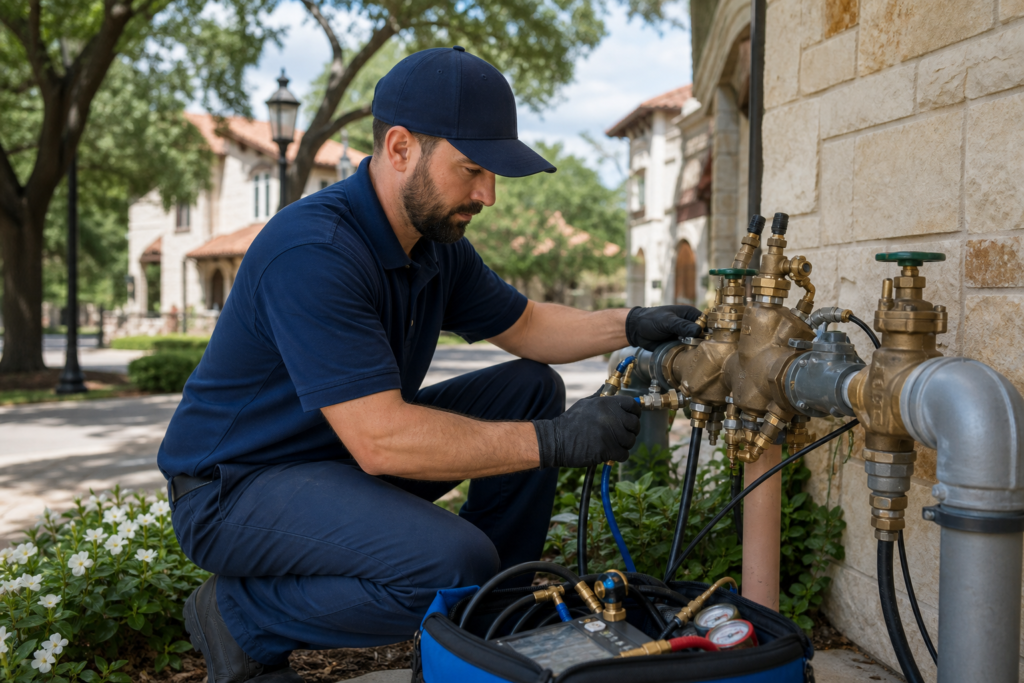
What Backflow Prevention Testing Does
Backflow prevention testing checks the device that keeps water moving in the right direction. When pressure changes happen in a plumbing system, water can sometimes reverse course and pull contaminants into the clean water supply. That risk matters for irrigation systems, commercial plumbing, fire suppression lines, and any property with a cross-connection.
Testing verifies that the backflow prevention assembly is working as intended. If the device is passing water correctly and holding pressure the way it should, your system is better protected. If it is not, a technician can identify the issue and recommend next steps before it becomes a larger concern.
Why Highland Park Property Owners Schedule Testing
In Highland Park, many properties have a mix of older plumbing components, updated landscape irrigation, and carefully managed water systems. That makes routine testing especially valuable. A valve that looked fine last season may not perform properly after wear, debris buildup, freezing temperatures, or a recent plumbing adjustment.
Property owners often schedule testing for:
- Annual backflow compliance
- Irrigation system service
- Commercial tenant improvements
- Plumbing repairs or fixture upgrades
- Fire line inspection support
- Peace of mind after water pressure changes
For homeowners, the biggest benefit is simple: protection of household water quality. For businesses, testing also helps reduce liability, avoid interruptions, and stay organized with maintenance records.
Common Backflow Devices We Test
Different properties use different assemblies depending on the level of risk and the type of plumbing connection. A qualified technician should be familiar with the most common devices and how they function in real-world conditions.
- Double Check Valve Assemblies
- Reduced Pressure Zone Assemblies
- Pressure Vacuum Breakers
- Atmospheric Vacuum Breakers
Each device has its own testing procedure and performance standards. If one needs repair or replacement, timely attention can help keep your property in compliance and reduce the chance of service disruption.
What to Expect During the Testing Visit
Backflow prevention testing is usually a relatively quick, organized process. The technician isolates the assembly, uses calibrated test equipment, and checks the valves for proper operation under pressure. If the device passes, you receive the documentation needed for your records or submission to the appropriate authority.
If a device fails, that does not always mean the entire system must be replaced. Sometimes the issue is a worn seal, debris inside the assembly, or a component that can be repaired. A knowledgeable technician can explain the result in plain language so you understand what happened and what to do next.
Benefits of Working With a Local Professional
Backflow requirements can vary depending on the property type, system setup, and local oversight. Working with someone familiar with Highland Park and the surrounding Dallas-area service environment makes the process easier. Local experience helps with scheduling, documentation, and understanding how different neighborhoods and property styles affect access to valves and assemblies.
That is especially useful for:
- Older homes with limited plumbing access
- Commercial properties with tenant coordination needs
- Landscaped properties with irrigation controllers and buried components
- Multi-system sites that need careful inspection and recordkeeping
A local technician also understands how seasonal conditions can affect testing schedules and device performance. That matters when winter cold, dry weather, or heavy irrigation use can put more strain on valves and connections.
When to Call for Testing or Service
It is smart to arrange service if your backflow assembly is due for its annual test, if you have noticed pressure irregularities, or if any plumbing work has recently been completed near the device. You should also schedule testing before deadlines when compliance notices are involved.
Signs that your system may need attention include:
- Visible leaks around the assembly
- Dripping or unusual discharge
- Reduced water pressure
- Irrigation issues after repairs
- Old or missing test documentation
Prompt service can prevent small issues from becoming bigger repairs. It also helps keep your household or business operating without avoidable interruptions.
Serving Highland Park and Nearby Communities
Backflow prevention testing in Highland Park often supports nearby neighborhoods and service areas throughout the Park Cities and greater Dallas area. Whether the property is a single-family residence, office, school, or small commercial site, the goal is the same: keep the water supply protected and the system working reliably.
With the right local service, residents can handle testing efficiently, maintain compliance, and protect one of the most important systems in any building.
About Highland Park, TX
Highland Park is an incorporated town in central Dallas County with a population of roughly 8,800 residents. It is known for its well-kept residential streets, established neighborhoods, and close connection to Dallas through the Park Cities area. Nearby communities include University Park, Preston Hollow, Bluffview, and other surrounding Dallas neighborhoods that often share similar plumbing and maintenance needs.
Residents and property owners here are close to local landmarks and activity centers such as Highland Park Village, Lakeside Park, Turtle Creek nearby, and the broader commercial corridors serving the Park Cities. The area’s mix of historic homes, updated estates, landscaped properties, and small businesses means backflow prevention testing is often a routine but important part of property care. Seasonal weather, including summer irrigation demand and occasional cold snaps in winter, can affect plumbing performance and make regular testing especially worthwhile. Local experience matters because access, system design, and compliance needs can vary from one property to the next in this part of Dallas.