Clean, dependable water starts with a properly protected plumbing system. In a neighborhood like Lower Greenville, where older homes sit alongside updated apartments, restaurants, offices, and mixed-use properties, backflow prevention testing is one of those services that protects daily life without most people thinking about it. When water pressure shifts or a system is connected in the wrong way, contaminated water can flow backward into the public supply. Routine testing helps make sure the prevention devices in place are doing their job.
Property owners in Lower Greenville rely on backflow testing to stay ahead of plumbing issues, protect drinking water, and remain compliant with local requirements. Whether you manage a residential property, a small business, or a larger commercial site, scheduled testing gives you a clear picture of your system’s condition and helps catch problems before they become costly repairs or service interruptions.
Why Backflow Prevention Testing Matters
Backflow prevention devices are designed to keep water moving in the right direction. When pressure changes happen in a plumbing system, those devices help stop used water, irrigation water, or other non-potable sources from entering the clean water supply. Testing confirms that the assembly is operating correctly and sealing as it should.
In a busy area like Lower Greenville, testing is especially important because many properties have a mix of plumbing needs. Restaurants, retail spaces, multifamily buildings, irrigation systems, and older residential connections can all create different pressure conditions. Regular backflow testing helps reduce risk, protect occupants, and support the safety of the water system serving the property.
Who Needs Backflow Testing in Lower Greenville
Backflow prevention testing is commonly recommended or required for:
- Homes with irrigation systems, pools, or sprinkler lines
- Multifamily properties and apartment buildings
- Restaurants, coffee shops, and hospitality businesses
- Office buildings and storefronts
- Properties with fire sprinkler or industrial water connections
If your property has a backflow assembly, testing should be part of the regular maintenance plan. Even a device that looks fine from the outside can fail internal checks, so routine inspection is the best way to confirm it is still protecting the water supply.
What the Testing Process Usually Includes
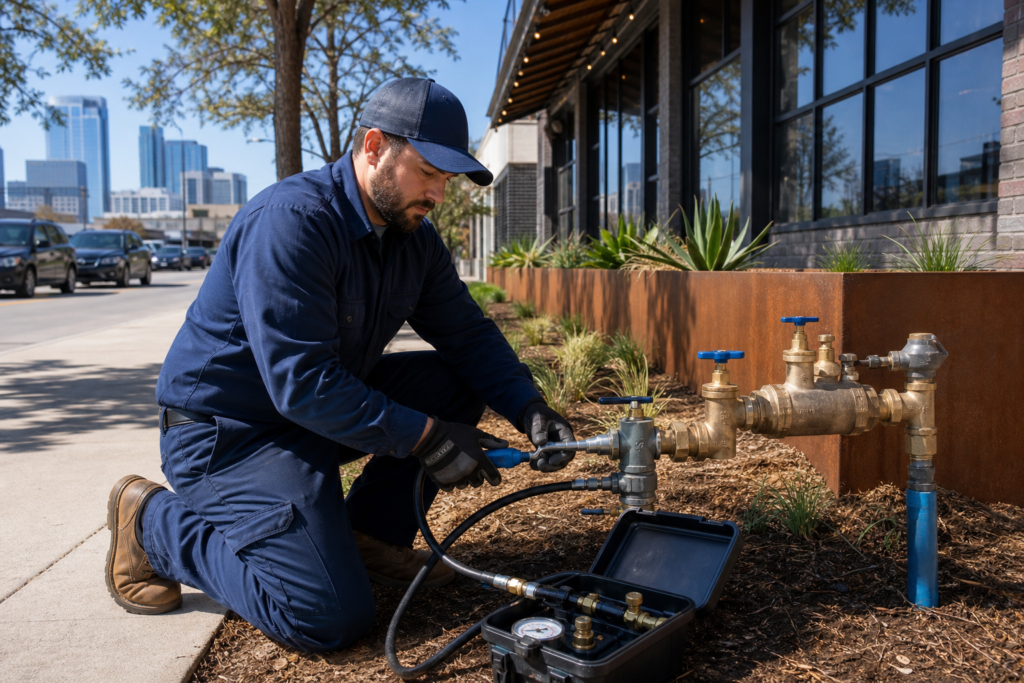
A licensed technician will connect specialized equipment to the backflow assembly and check how the valves respond under pressure. The goal is to verify that the device prevents reverse flow and meets performance standards. If the assembly passes, you receive documentation for your records and any required compliance filing.
If the device fails, that does not always mean a major plumbing problem. Sometimes it needs cleaning, adjustment, or repair. In other cases, replacement may be the most practical option, especially if the unit is older or worn. Either way, testing gives you a clear next step instead of leaving the system in question.
Benefits of Scheduling Service Locally
Working with a local provider in Lower Greenville makes the process easier from start to finish. Local technicians understand the types of plumbing systems common in the neighborhood and the practical demands that come with older buildings, active commercial spaces, and seasonal water use. That local experience can save time and reduce unnecessary guesswork.
- Faster scheduling for annual testing and follow-up service
- Better familiarity with common residential and commercial setups
- Clear communication about next steps if a device fails
- Convenient service for properties near Greenville Avenue and surrounding streets
Common Signs a Backflow Device May Need Attention
Not every problem is obvious, but a few warning signs can suggest the assembly should be checked sooner rather than later:
- Unexpected changes in water pressure
- Discolored water or unusual odor
- Leaks or dripping around the device
- Failed previous test results
- Recent plumbing work, irrigation changes, or utility issues
If you notice any of these concerns, arranging testing promptly can help protect your property and avoid disruption.
Why Lower Greenville Properties Benefit from Routine Testing
Lower Greenville has a mix of neighborhood homes, townhomes, apartment communities, and local businesses, which means plumbing systems vary widely from one property to the next. Some buildings are older and may need extra attention. Others are newer but still rely on irrigation, specialty fixtures, or commercial water equipment that must be monitored carefully.
Routine backflow testing helps property owners stay proactive. It supports safe water use, helps maintain compliance, and gives peace of mind that the system is working the way it should. For busy residents and business owners, that kind of certainty matters.
Schedule Backflow Prevention Testing
Whether you manage a single-family home or a commercial property, regular testing is a smart way to protect your water system and avoid avoidable problems. A qualified local technician can inspect the device, confirm proper operation, and help you stay on schedule with future testing.
When backflow prevention testing is handled by someone who understands Lower Greenville’s mix of properties and plumbing needs, the process is simpler and more dependable.
About Lower Greenville, TX
Lower Greenville is a well-known Dallas neighborhood with a lively mix of residential streets, apartments, restaurants, shops, and walkable entertainment areas centered around Greenville Avenue. It is a highly active part of the city, with a blend of older homes, updated properties, and commercial buildings that often need regular plumbing care to stay reliable. While the area does not have its own separate population count, it is part of the larger Dallas community and serves a dense local population of residents, workers, and visitors.
The neighborhood’s mix of housing types and business activity makes backflow prevention testing a practical need here. Properties near local dining corridors, neighborhood retail, parks, and surrounding East Dallas communities can all face different water-use demands. Seasonal heat, irrigation use, and the age of some plumbing systems can also affect how well backflow devices perform. Local experience matters because service providers familiar with Lower Greenville understand the pace of the area, the variety of property types, and the nearby communities that often share similar maintenance needs, including East Dallas, Lakewood, M Streets, and nearby neighborhoods throughout the greater Dallas area.