The testing process helps confirm that your backflow preventer is working the way it should, so contaminated water does not flow the wrong direction and enter the clean water supply.
For homeowners, property managers, and business owners, regular testing is more than a box to check. It helps protect drinking water, supports code compliance, and can prevent expensive plumbing issues later. In a growing community like Sachse, where many properties combine residential plumbing, irrigation systems, and commercial water use, having a local technician who understands the process makes it simpler to stay on schedule and handle repairs or paperwork without unnecessary delays.
Why backflow testing matters for Sachse properties
Backflow happens when water pressure changes and water moves in the wrong direction through a plumbing system. When that occurs, irrigation water, chemicals, or other contaminants can potentially enter the potable water supply. A properly functioning backflow preventer helps stop that from happening, but the device must be tested regularly to make sure the internal valves, seals, and pressure components are still operating correctly.
In Sachse, backflow prevention testing is especially important for properties with sprinkler systems, commercial equipment, pools, fire lines, and certain multi-family or industrial plumbing setups. Annual testing is commonly required, and many property owners prefer to stay ahead of the deadline so they do not run into avoidable compliance issues.
What the testing process involves
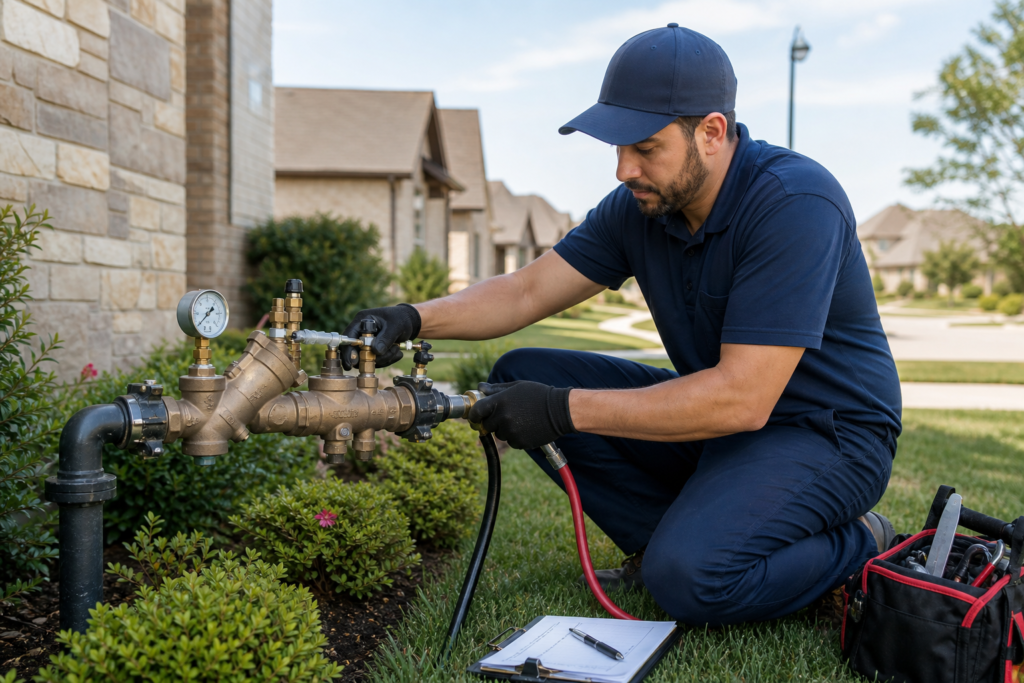
A trained technician uses specialized gauges and test kits to check whether the backflow assembly holds pressure and closes properly under different conditions. The inspection is designed to verify that the device can do its job during a pressure change, which is when backflow risk is highest.
During a typical appointment, the technician may:
- Inspect the backflow assembly for visible damage or wear
- Connect test equipment to measure pressure and valve performance
- Check for leaks, slow closures, or failed internal components
- Document the results for the property owner and the water provider
If the device passes, you have proof it is functioning correctly. If it fails, the technician can explain the issue and discuss repair or replacement options so the system can be brought back into compliance.
Who needs backflow prevention testing
Many Sachse residents are surprised to learn that backflow testing is not just for large commercial buildings. It is often required for:
- Homes with irrigation or sprinkler systems
- Properties with pools, hot tubs, or landscape watering systems
- Commercial storefronts and offices
- Multi-family properties and managed communities
- Buildings with fire suppression systems or specialized plumbing connections
If you are not sure whether your property needs testing, a local plumbing professional can usually help determine the type of assembly you have and whether it falls under current requirements.
Benefits of local service in Sachse
Working with a nearby backflow testing provider makes the process much easier. Local technicians are familiar with regional water use patterns, seasonal irrigation demand, and the practical challenges that come with North Texas weather. They also understand the importance of getting the paperwork completed correctly, since many water utilities require test reports after service is performed.
Local experience matters because properties in Sachse can vary widely. Some are single-family homes with simple outdoor irrigation, while others involve commercial spaces, HOA-managed landscapes, or newer developments with more complex plumbing layouts. A technician who works in the area regularly is better prepared to identify the right assembly, spot common issues, and recommend the most efficient solution.
Common signs a backflow device may need attention
Backflow preventers do not always show obvious warning signs before failing a test, but there are a few things property owners should watch for:
- Visible leaking or dripping around the assembly
- Rust, corrosion, or damaged fittings
- Reduced water pressure near the protected line
- Recent plumbing work or irrigation repairs
- A failed test notice from the water provider
Even if everything appears to be working normally, the device still needs periodic testing because internal parts can wear out over time. Catching problems early can help avoid interruptions, protect your water supply, and reduce the chance of an unexpected service call later.
What to expect from a professional appointment
A reliable backflow testing visit should be straightforward and minimally disruptive. The technician will arrive prepared with the right equipment, complete the test efficiently, and explain the results in clear language. If the assembly passes, you can move forward with confidence. If repairs are needed, the technician should outline the next steps so you know what to expect.
For busy homeowners and business operators in Sachse, this kind of service is valuable because it keeps one important part of property maintenance off your worry list. Regular testing helps protect your plumbing system, supports safe water use, and keeps you on track with local compliance expectations.
Schedule backflow prevention testing before it becomes urgent
If your Sachse property has a backflow preventer, routine testing is one of the simplest ways to keep your water system protected. A qualified local technician can inspect the device, complete the required test, and help you address any issues quickly so your property stays compliant and your water remains safe.
About Sachse, TX
Sachse is a growing city in Collin and Dallas counties with a population a little over 27,000. Residents know it for its neighborhood feel, convenient access to the Dallas-Fort Worth metroplex, and a mix of established homes and newer developments. Areas near Highway 78, President George Bush Turnpike, and local subdivisions around the city all include properties that may need routine water system maintenance.
Community spaces like Salmon Park, Sachse’s trail connections, and nearby shopping and business corridors reflect the city’s blend of residential and commercial activity. North Texas weather can also put extra strain on irrigation systems and outdoor plumbing, especially during hot summers and periods of rapid temperature change. That makes backflow prevention testing a practical service for local homeowners, property managers, and businesses. Local experience matters here because service providers need to understand the mix of property types, seasonal water demand, and nearby communities such as Wylie, Rowlett, Garland, and Murphy.