If you live or manage property in Park Cities, keeping your water supply protected is more than a routine maintenance task. Backflow prevention testing helps confirm that your plumbing system is doing its job and keeping contaminated water from flowing into clean drinking water. For homes, multi-unit properties, and commercial buildings, that peace of mind matters year-round.
Park Cities property owners often deal with a mix of older plumbing, upgraded irrigation systems, and changing water demand across the seasons. That combination makes regular testing especially important. A properly tested and maintained backflow preventer can help you stay compliant with local requirements, avoid unexpected service issues, and protect the people who rely on your water every day.
What Backflow Prevention Testing Does
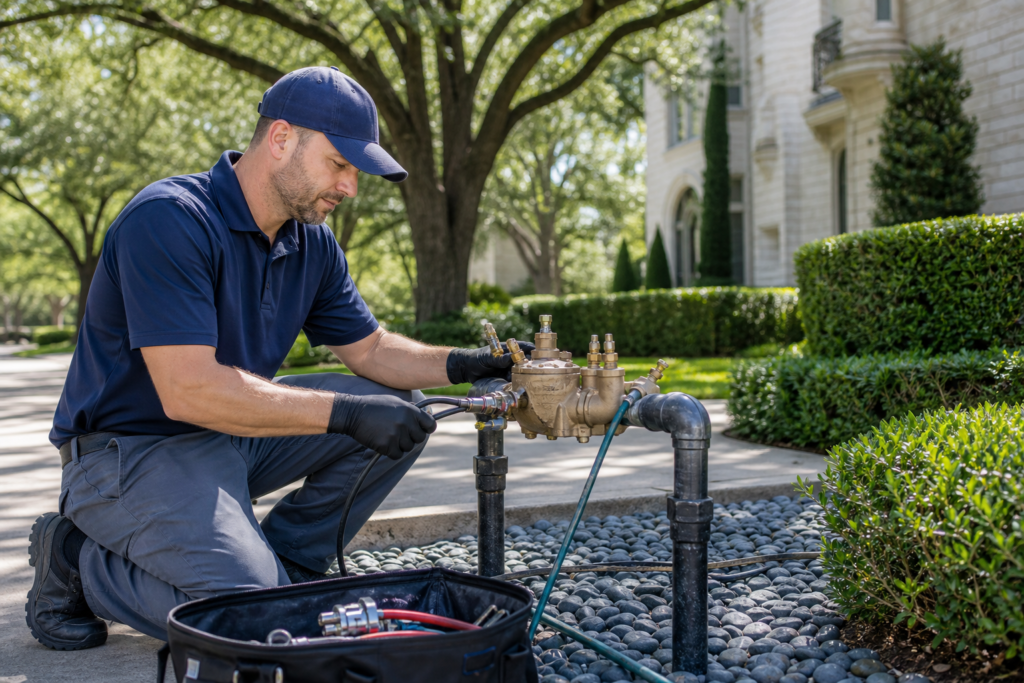
Backflow prevention testing verifies that the device installed on your water line is operating correctly. The device is designed to stop water from flowing backward into the public water supply or your building’s clean water lines. When pressure changes occur, a failed assembly can allow fertilizers, cleaning chemicals, stagnant water, or other pollutants to enter the potable water system.
In Park Cities, backflow testing is especially important for properties with irrigation systems, fire suppression systems, pools, commercial equipment, or any plumbing setup that creates a cross-connection risk. Regular testing helps identify worn parts, stuck valves, or pressure issues before they become a bigger problem.
Who Needs Backflow Testing in Park Cities
Many property types can benefit from scheduled testing and inspection:
- Single-family homes with sprinkler or irrigation systems
- Townhomes and condominiums
- Apartment communities and rental properties
- Retail spaces, offices, and restaurants
- Medical, educational, and hospitality facilities
- Properties with boilers, pools, or fire lines
Even if your plumbing seems to be working normally, a backflow device can fail without obvious warning signs. Testing provides a clear check on performance and helps you avoid water safety issues that are difficult to see until there is a problem.
Why Regular Testing Matters
Backflow prevention assemblies are mechanical devices, which means they wear down over time. Springs weaken, seals deteriorate, and debris can interfere with proper operation. Annual testing is a common requirement for many properties, and it is also a practical way to protect your water system from avoidable risk.
Routine testing can help you:
- Protect drinking water from contamination
- Catch failing parts before they cause service interruptions
- Support compliance with municipal or utility requirements
- Document that your property is being properly maintained
- Reduce the chance of costly repairs from hidden plumbing issues
What to Expect During a Test
A certified technician will typically inspect the assembly, connect specialized test equipment, and check the device under controlled conditions. The goal is to confirm that each internal component opens and closes as it should. If the assembly passes, you have documentation showing it is working properly. If it fails, you will receive clear information about the issue and the next steps for repair or replacement.
For property owners, the process is usually straightforward. The water service may need to be briefly interrupted, but testing is generally completed efficiently. A good technician will explain what was found, answer questions, and help you understand whether the device is still serviceable.
Backflow Services for Park Cities Properties
Local experience matters because properties in Park Cities often have a blend of mature landscaping, upgraded irrigation, and varied building types. The right testing approach depends on the device type, system layout, and how the property is used. A knowledgeable local provider understands how to work around seasonal watering needs, busy commercial schedules, and the practical realities of maintaining water systems in a dense, well-established area.
Backflow prevention testing services commonly include:
- Annual device testing
- Inspection of backflow assemblies
- Repair recommendations after a failed test
- Replacement of damaged or outdated devices
- Testing for irrigation, domestic water, and fire line assemblies
- Documentation for property records and compliance
Common Signs Your Device May Need Attention
While testing is the only reliable way to confirm proper operation, certain signs can indicate trouble:
- Visible leaks or corrosion around the assembly
- Reduced water pressure
- Sprinkler or irrigation irregularities
- Unusual noises near the device
- A history of failed tests or recent plumbing repairs
If you notice any of these issues, scheduling a prompt inspection can help prevent bigger problems. Even a small valve issue can compromise the device’s ability to protect your water supply.
Why Park Cities Property Owners Choose Professional Testing
Backflow prevention testing is one of those services that pays off in confidence. It helps safeguard your household, your tenants, your customers, and your building systems. For Park Cities residents, it also helps keep property maintenance on track in a community where expectations for quality and reliability are high.
Working with a local professional means you get practical guidance, proper documentation, and service that fits the way properties in this area are used. Whether you need a routine annual test or help after a failed inspection, the goal is the same: protect the water that your property depends on.
About Park Cities, TX
Park Cities, Texas, refers to the well-known Highland Park and University Park area just north of Dallas. It is a highly established residential community with a population that is widely recognized for being dense, well-maintained, and built around strong neighborhood character. Tree-lined streets, older homes, updated estates, and nearby commercial corridors all create a setting where property systems need regular attention.
Residents and property managers in Park Cities are close to neighborhoods and destinations such as Highland Park Village, Snider Plaza, SMU, and nearby Dallas communities. The area’s mature landscaping, active irrigation systems, and mix of residential and commercial plumbing setups make backflow prevention testing especially relevant. Seasonal heat, dry periods, and heavy watering demand can all affect irrigation systems, while older infrastructure may need more frequent inspection. Local experience matters because a technician familiar with Park Cities understands the pace of the area, the variety of properties, and the importance of reliable water protection for nearby communities as well.