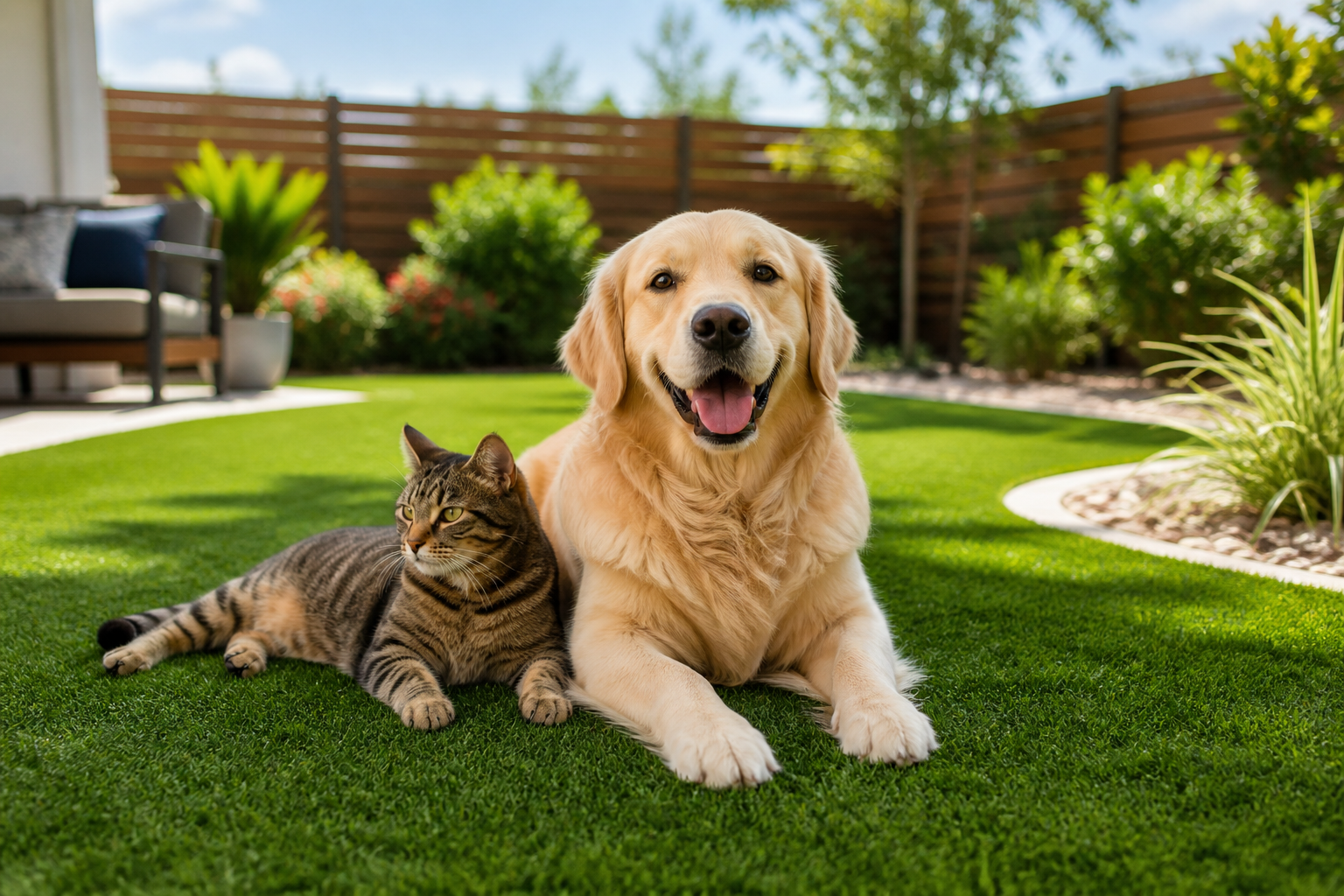
Why Choose Pet-Friendly Artificial Turf?
Artificial turf designed specifically for pets offers a clean, durable, and low-maintenance alternative to natural grass. Pet-friendly turf resists digging, drains well, reduces mud, and can withstand the wear and tear of active animals. For busy pet owners, it means fewer muddy paws, no patchy spots from digging and use, and a yard that looks great year-round.
Key Features to Look For
Durable, Bite-Resistant Fibers
Look for turf with strong, tightly packed fibers and a high tuft bind. Shorter pile heights (around 1 to 1.5 inches) with dense stitch rates tend to resist matting and chewing better than long, plush blades.
Effective Drainage
Good drainage is essential. Pet turf should have a perforated backing and an appropriate base—typically crushed stone or a compacted aggregate—with a slightly sloped surface. This lets liquid pass through quickly and prevents pooling and lingering odors.
Pet-Safe Infill Options
Infill improves cushioning and helps turf blades stand upright. For pets, choose non-toxic infill like silica sand, zeolite, coated sand, or thermoplastic elastomer (TPE). Avoid crumb rubber infill when dogs regularly lick or ingest bits of the surface.
Antimicrobial and Odor-Control Features
Many pet-friendly turfs are treated with antimicrobial agents or incorporate odor-controlling materials in the infill to neutralize urine-based smells. Products that promote easy rinsing also reduce long-term odor buildup.
Installation: What to Expect
Professional installation typically includes site preparation, base installation, turf laying, infill application, and finishing. A well-prepared base ensures proper drainage and prevents sinking or shifting. Home installations are possible for small areas, but professionals can ensure correct slope and seam work for longevity.
Base Materials and Slope
- Crushed rock or decomposed granite compacted to a firm, porous layer.
- Slight slope (1-2%) away from foundations to direct runoff.
- Optional shock pads under turf for extra cushioning on compacted soils.
Seams and Edges
Properly sealed seams and secured edging prevent pet paws from catching on loose areas. Durable edging materials help stop digging and maintain a neat appearance.
Odor and Sanitation Solutions
Daily Routines
Scoop solid waste promptly and rinse the area with water to dilute urine. A quick hose-down after high-use times keeps the turf fresher.
Deep Cleaning
Use enzyme-based cleaners to break down organic matter and neutralize odors. For heavy odors, rinse and apply manufacturer-recommended deodorizing agents. Avoid harsh chemicals that can damage turf backing or harm pets.
Periodic Maintenance
- Power-rinse every few weeks in high-use areas.
- Brush turf fibers occasionally with a stiff broom or power brush to keep blades upright.
- Top up infill if areas become compacted.
Safety, Comfort, and Health Considerations
Temperature and Heat
Artificial turf can get hotter than natural grass in full sun. Mitigate heat by providing shaded areas, using cooling infill products, or lightly wetting the turf on hot days. Always monitor pets for signs of overheating or paw discomfort.
Non-Toxic Materials
Confirm that all materials—backing, infill, adhesives—are pet-safe and free from harmful chemicals. Look for turf certified to meet safety standards or specifically marketed for pets.
Paw Comfort and Traction
Choose turf with a comfortable pile height and adequate cushioning to reduce paw wear. A shock pad can add extra softness for senior pets or active dogs that run and jump frequently.
Environmental and Cost Considerations
Pet-friendly turf saves water, reduces pesticide and fertilizer use, and lowers lawn maintenance time. Upfront costs can be higher than sod, but long-term savings on water and lawn care often offset the initial investment. Consider product lifespans and warranties—many turfs last 10–15 years with proper care.
Common Concerns & FAQs
Will My Dog Stop Digging?
Turf discourages digging by eliminating loose soil and giving a firm surface. Extremely determined diggers may still try—address this with training, enrichment, and deterrents along edges.
Does Turf Increase Allergy or Health Risks?
Artificial turf reduces exposure to pollen and some lawn allergens but can trap dust and dander. Regular cleaning minimizes any buildup. Choose non-toxic materials and maintain good sanitation practices.
How Long Does It Last?
Quality pet turf properly installed and maintained often lasts 10–15 years. Warranties vary, so check manufacturer terms for pet-specific coverage.
Choosing the Right System
Work with a reputable installer familiar with pet applications. Ask about drainage tests, sample materials, infill options, maintenance plans, and references from other pet owners. A tailored system will provide the best balance of durability, comfort, and odor control.
Conclusion
Pet-friendly artificial turf is a practical solution for pet owners seeking a clean, durable, and low-maintenance yard. By choosing the right materials, ensuring proper installation, and following a simple maintenance routine, you can create a safe, comfortable outdoor space that pets and people both enjoy.