Understanding Landscape Drainage
Water pooling, soggy lawns, and basement leaks are common signs of poor landscape drainage. Managing surface and subsurface water is essential to protect plantings, prevent soil erosion, and safeguard structures. This guide walks through practical drainage solutions, planning tips, and maintenance practices to keep your landscape functioning well year-round.
Diagnosing Drainage Problems
Identify the Symptoms
Look for standing water after storms, muddy patches, slow-draining areas, overflow near foundations, and tilted patios or walkways. Note where water collects and the path it travels—this helps pinpoint low spots, clogged outlets, or grading issues.
Assess Soil and Slope
Soil type matters: clay holds water, while sandy soil drains quickly. Use a simple test by digging a hole, filling it with water, and timing how long it takes to drain. Also measure the slope away from your home—ideally the ground should grade away at least 1 inch per foot for the first 6–10 feet.
Common Landscape Drainage Solutions
Grading and Regrading
Adjusting the slope of your yard is the first line of defense. Regrading moves soil to direct runoff away from structures and toward safe discharge points. This solution is often combined with others for long-term effectiveness.
French Drains
A French drain is a trench filled with gravel and a perforated pipe that redirects groundwater away from problem areas. It works well for linear issues like along foundations or behind retaining walls. Proper installation depth and filter fabric are key to prevent clogging.
Surface Swales
Swales are shallow, vegetated channels designed to move surface runoff. They slow water flow, encourage infiltration, and can be attractive landscape features when planted with native grasses and perennials.
Dry Wells and Soakaways
Dry wells are underground structures that collect runoff and release it slowly into the surrounding soil. They’re ideal where you need quick collection but have good infiltration capacity in the soil below.
Catch Basins and Drainage Inlets
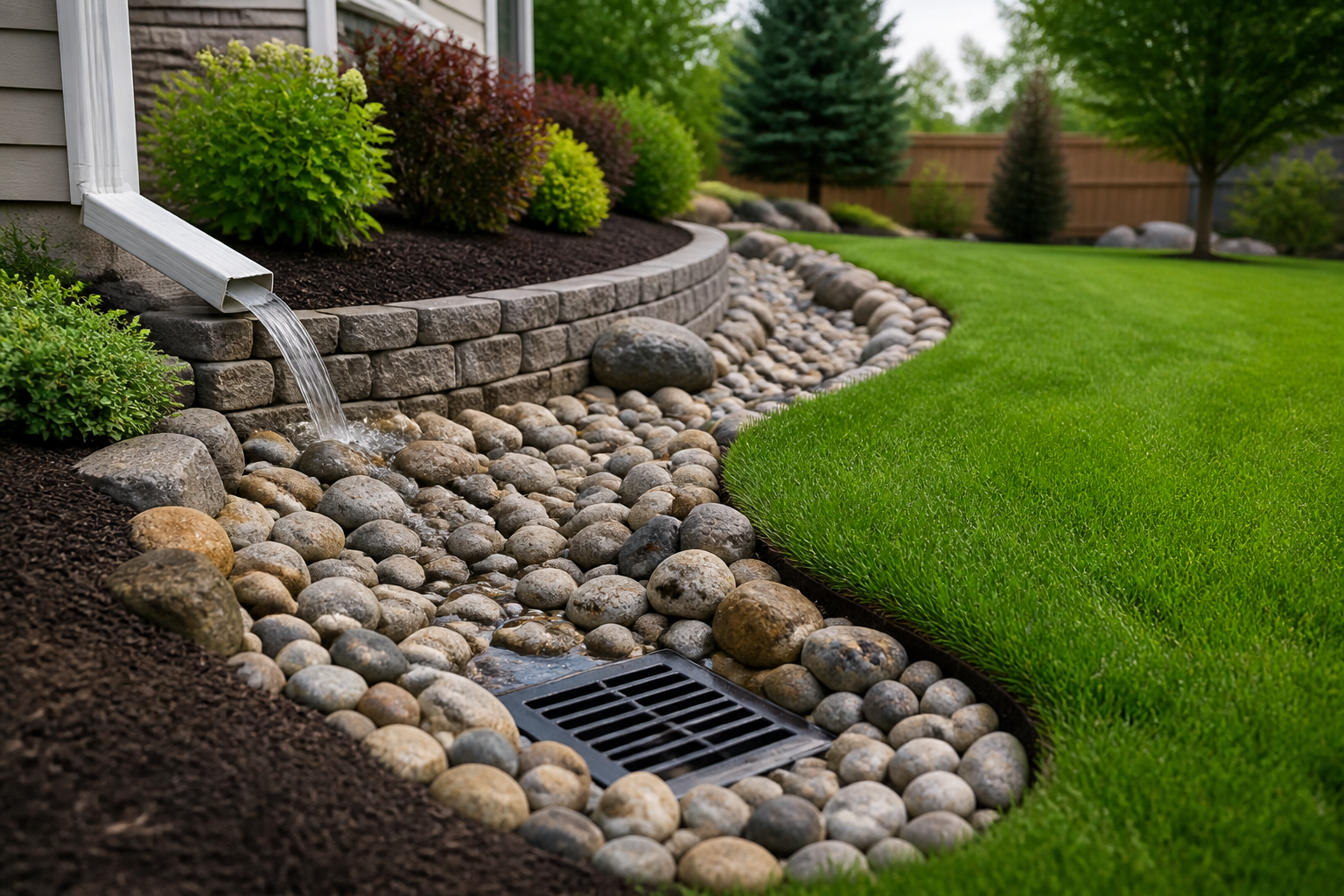
Catch basins collect surface water and connect to underground pipes. They’re useful in hardscaped areas like driveways and patios, preventing water from pooling on surfaces and channeling it to a safe outlet.
Downspout Extensions and Rain Barrels
Redirect roof runoff by extending downspouts or connecting them to underground pipes. Rain barrels capture roofwater for reuse in irrigation, reducing the volume hitting the ground near your foundation.
Permeable Pavers and Improved Hardscape Design
Permeable surfaces let water soak through rather than run off. Using permeable pavers, gravel, or gaps between stones can drastically reduce surface runoff and improve site drainage.
Rain Gardens
Rain gardens are shallow planted depressions that absorb and filter stormwater. Planted with native, water-tolerant species, they create habitat and reduce runoff while adding beauty to the yard.
Retaining Walls with Drainage
Retaining walls need proper drainage to prevent hydrostatic pressure buildup. Weep holes, gravel backfill, and drains behind the wall keep water from damaging the structure.
Design and Planning Tips
Create a Drainage Plan
Map your yard, marking low spots, roof runoff points, and where water naturally flows. Determine where possible discharge points are—storm drains, public rights-of-way, or areas that can safely accept extra water without damage.
Consider Local Regulations
Check local codes before altering drainage paths. Discharging water onto neighboring properties or public ways may be restricted; permits may be required for certain installations.
Installation and Maintenance
DIY vs. Professional Installation
Smaller fixes like grading, downspout extensions, and rain gardens can be DIY projects. Complex systems—French drains, buried pipes, or major regrading—often require professionals to ensure proper slope, materials, and connections.
Regular Maintenance
Keep gutters and catch basins clear, inspect drains for sediment buildup, and refresh gravel or filter fabric as needed. Replace clogged perforated pipe and trim vegetation that may block swales or inlets.
Cost and Longevity Considerations
Costs vary widely: simple grading and rain gardens are relatively affordable, while extensive trenching, piping, and engineered solutions are pricier. Invest in quality materials and proper installation—well-designed drainage systems reduce long-term repair costs.
When to Call a Professional
If you see repeated basement flooding, structural damage, or are unsure about soil conditions and slopes, hire a licensed landscaper, drain specialist, or civil engineer. Professionals can provide surveys, design plans, and ensure compliance with local codes.
Conclusion
Effective landscape drainage protects your property, promotes healthy plants, and prevents costly damage. Start by diagnosing the problem, choose solutions that match your site and budget, and maintain systems regularly. With thoughtful planning and the right mix of techniques—grading, drainage structures, permeable materials, and plantings—you can keep your yard dry and attractive year-round.